
immersed_h4p2, \(h = 0.375\), \(p = 2\)).

Verify the ability of Coreform IGA for Abaqus to predict stress concentrations on a classic linear-elastic stress-concentration problem: a uniaxially-loaded coupon with a central circular hole. The quantity of interest is the peak stress at the hole edge, whose accepted value is the stress-concentration factor tabulated by Roark[1]. We also compare the transverse stress and displacement profiles along the line probe against a reference body-fitted Abaqus solution.
A thin rectangular coupon with a central circular hole as shown in (Figure 1) and parameters provided in Table 1. Verification quantities are sampled along the shortest span from the hole edge to the free edge.
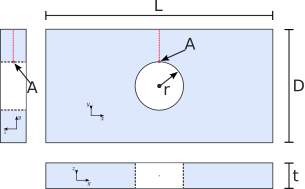
| Quantity | Symbol | Value |
|---|---|---|
| Coupon length | \(L\) | \(200\) |
| Coupon width | \(D\) | \(40\) |
| Hole radius | \(r\) | \(10\) |
| Thickness | \(t\) | \(1\) |
The coupon is a homogeneous, isotropic, linear-elastic material with properties given in (Table 2).
| Property | Symbol | Value |
|---|---|---|
| Young’s modulus | \(E\) | 1 |
| Poisson’s ratio | \(\nu\) | 0 |
| Mass density | \(\rho\) | 0 |
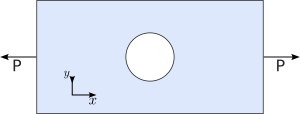
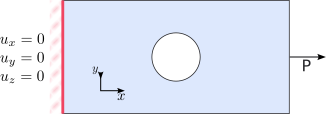
The coupon is loaded in uniaxial tension by a uniform pressure on the right face (Table 3), with the left face pinned as depicted in Figure 2. The load is chosen to be small, compared to the Young’s modulus, so that the response is assumed linear.
| Quantity | Symbol | Value |
|---|---|---|
| Applied end pressure | \(P\) | \(1.00 \times 10^{-6}\) |
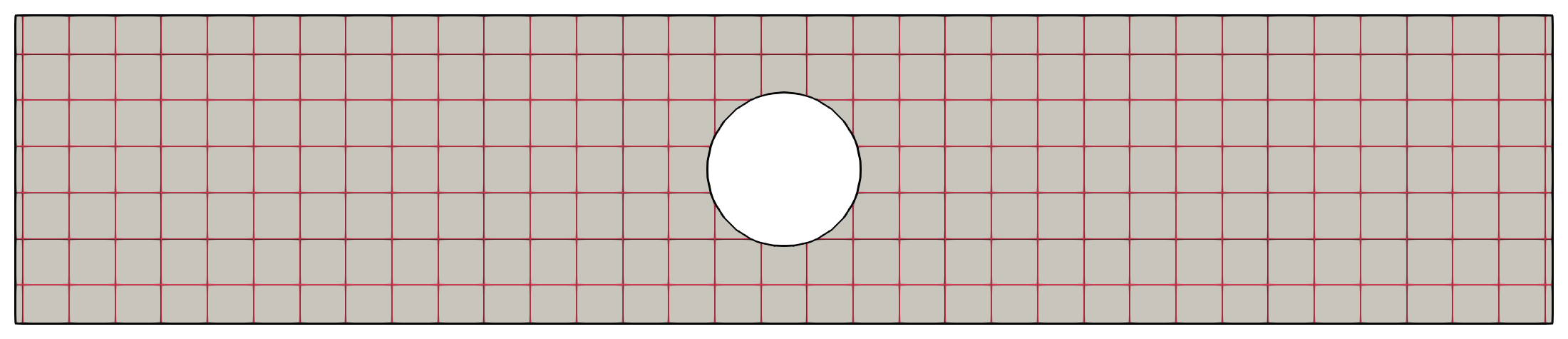
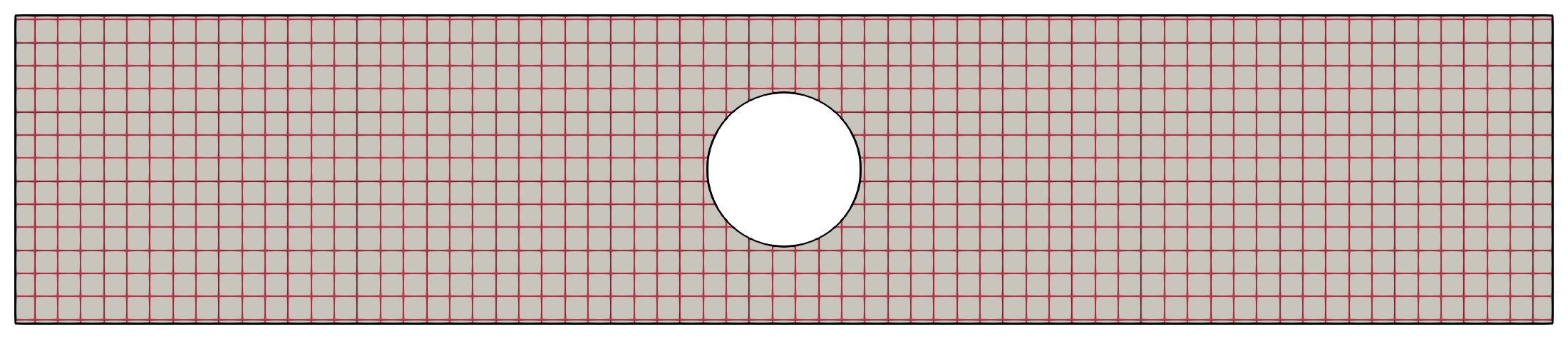
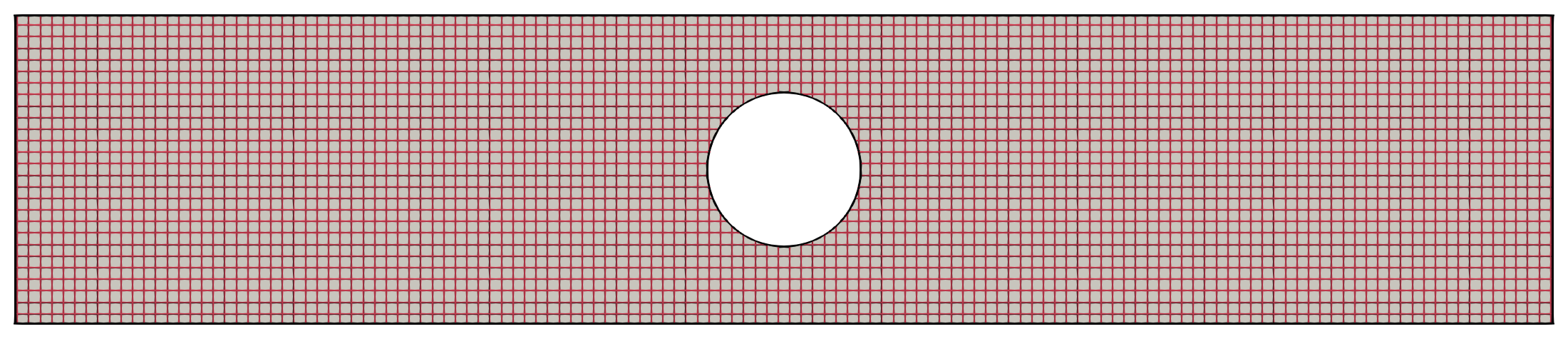
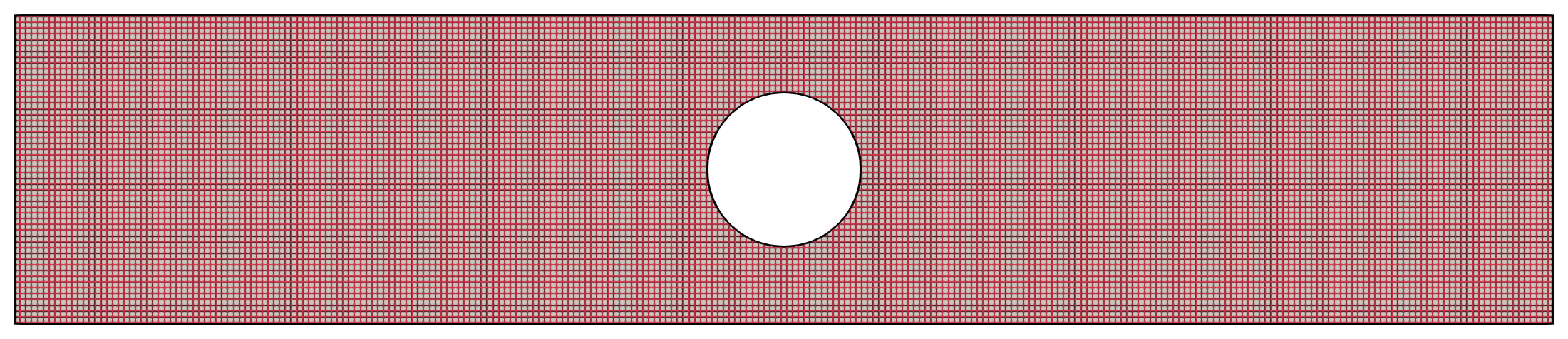
Coreform IGA discretizes the coupon with immersed, trimmed U-splines: a structured background spline is trimmed to the coupon-with-hole geometry rather than body-fitting a mesh to it. We run an \(h/p\) refinement study — background element size \(h = 6/2^{k}\) for \(k = 0,\dots,4\) at polynomial degrees \(p = 1\), \(2\), and \(3\). Per-mesh element, node, and degree-of-freedom counts are reported in Section 8.
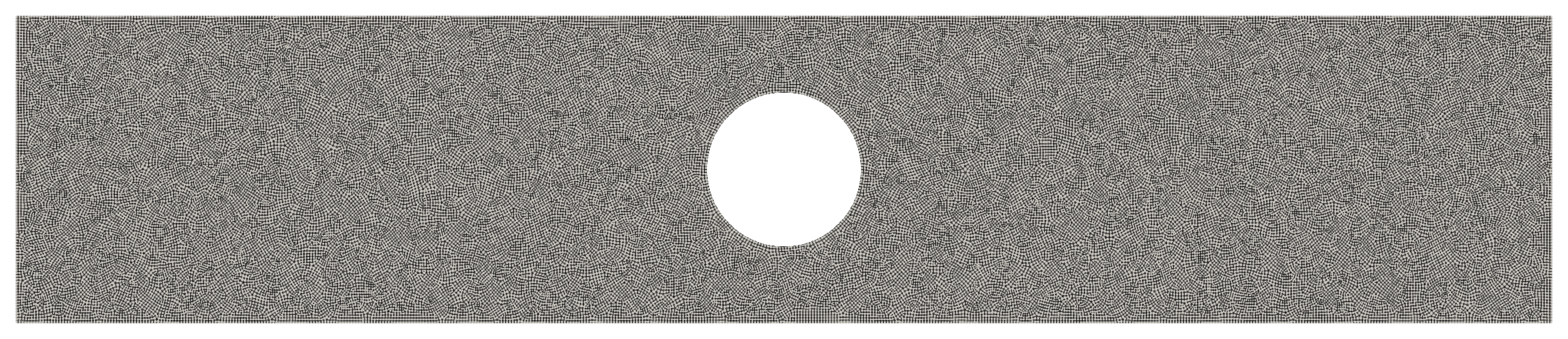
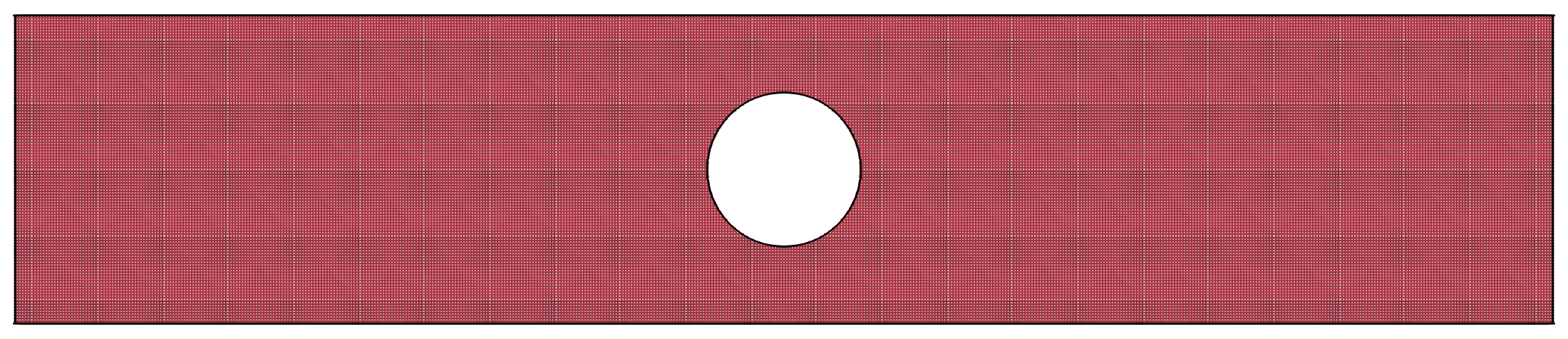
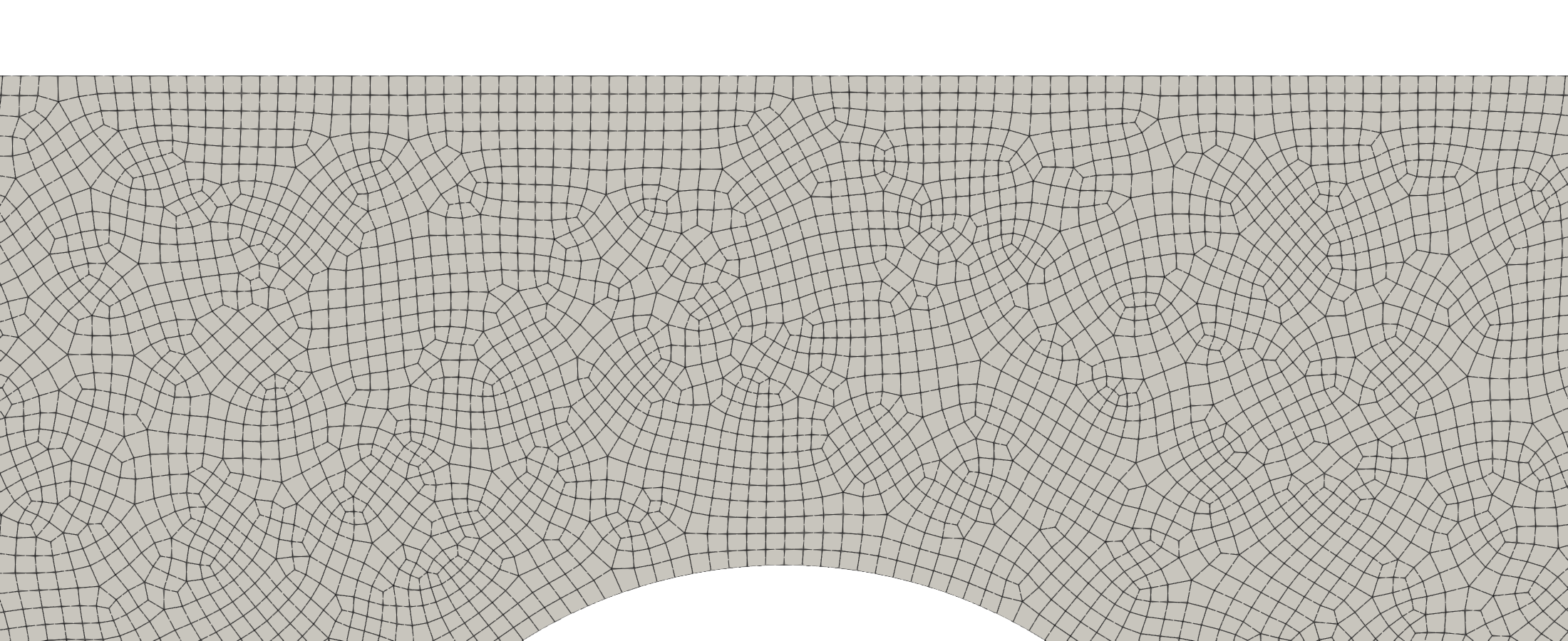
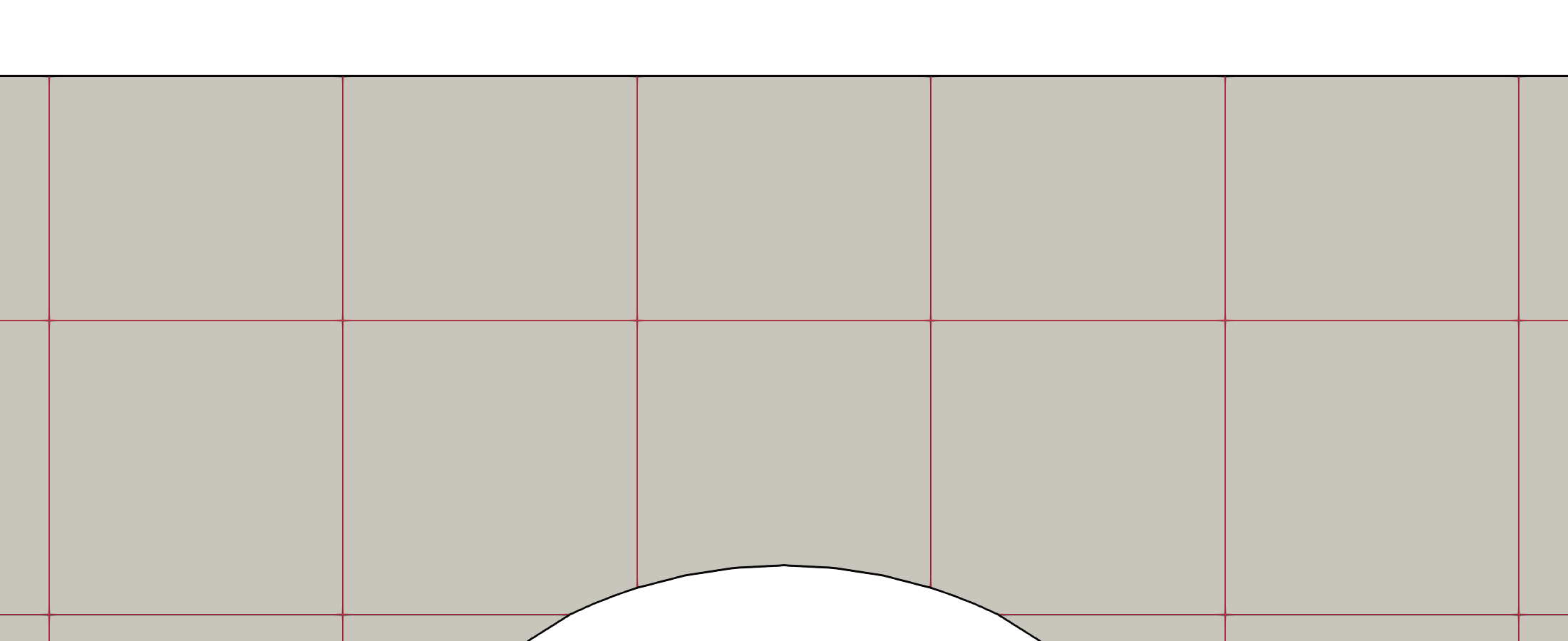
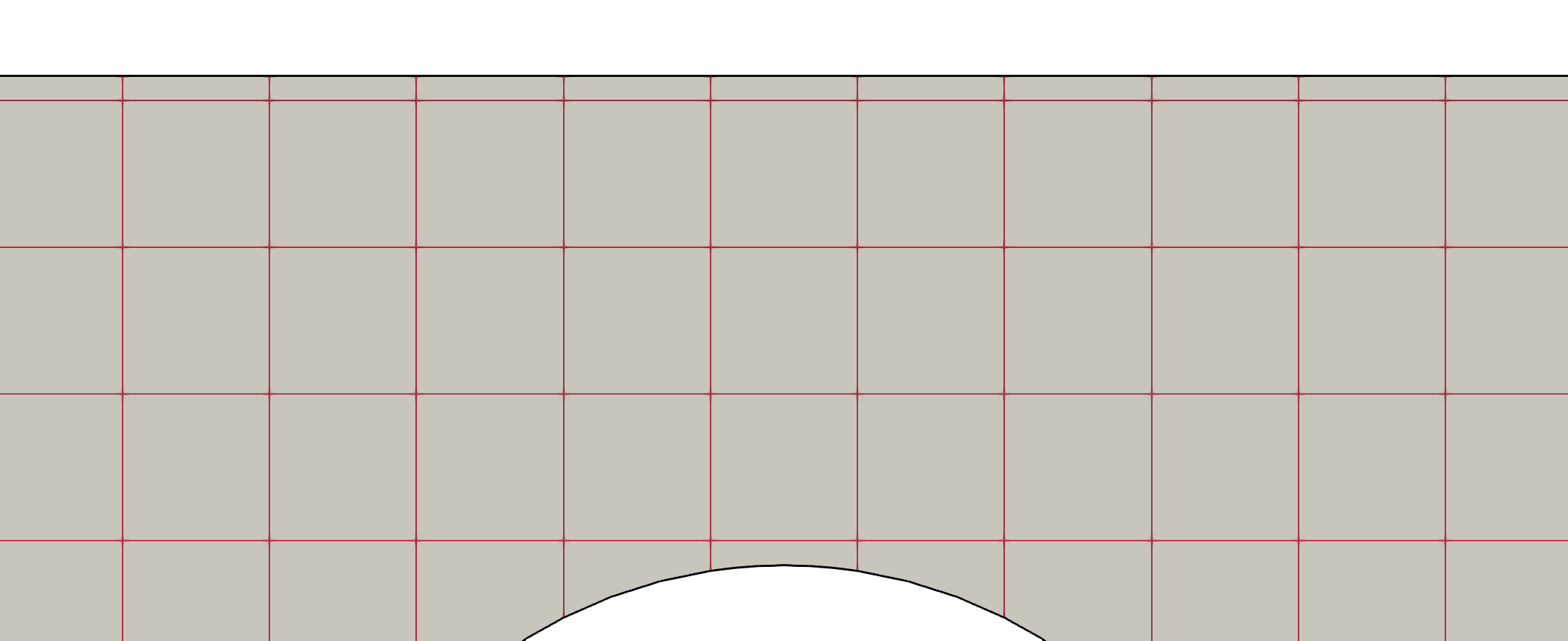
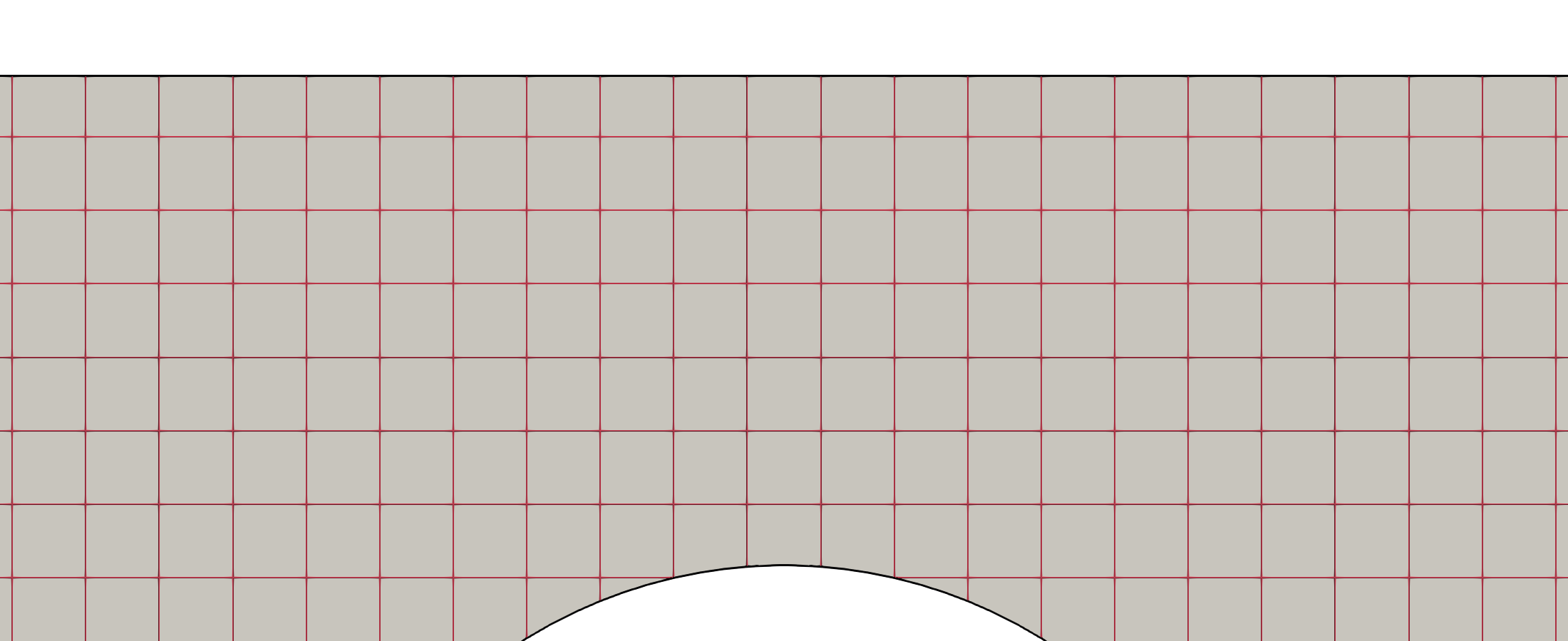
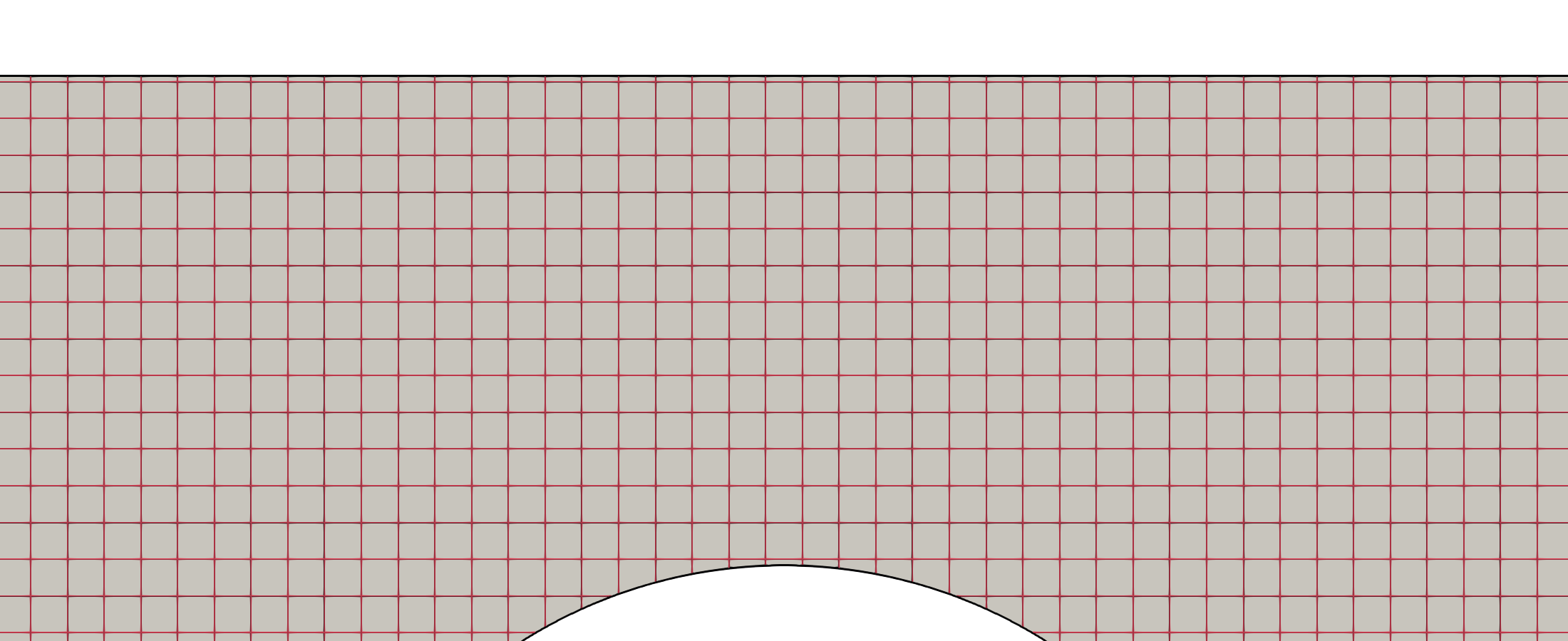
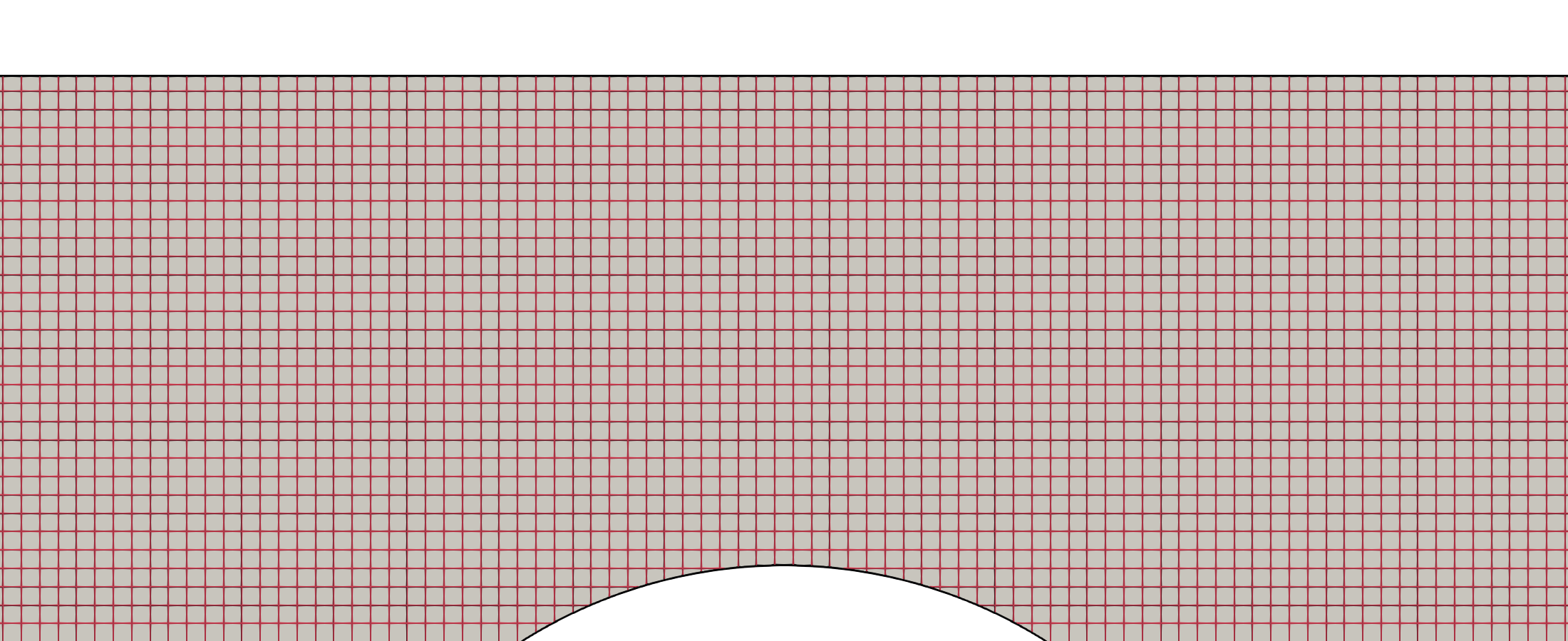
The tabs below show the trimmed immersed mesh at each background element size \(h\) (the mesh is shared by all degrees \(p\)), rendered from the run’s IGA results database: trimmed Bezier element edges (carnation) on the CAD surface, CAD edges in black. The Reference tab shows the body-fitted Abaqus mesh, rendered from the VTU the reference test exports. The first group views the full coupon; the second is a detail of the nominal section, from the top of the hole to the top of the coupon.
Full coupon
Nominal-section detail
Roark’s Formulas for Stress and Strain, Table 17.1 case 7a, gives the accepted stress-concentration factor for the net section,
\[ K_t = \sum_{i=0}^{3} C_i \left(\tfrac{2r}{D}\right)^i , \]
with the polynomial coefficients \(C_i\) listed in Table 4. The nominal stress on the net section is
\[ \sigma_{\text{nom}} = \frac{P\,t D}{t\,(D - 2r)} , \]
so the accepted peak max-principal stress at the hole edge is
\[ \sigma_{\max} = K_t\,\sigma_{\text{nom}} . \]
Its evaluated value is reported alongside the reference solve in Table 5.
| Coefficient | Value |
|---|---|
| \(C_0\) | \(3.00\) |
| \(C_1\) | \(-3.13\) |
| \(C_2\) | \(3.66\) |
| \(C_3\) | \(-1.53\) |
The reference solution is a normal Abaqus analysis of the same coupon using a dense, body-fitted mesh of quadratic elements. Its transverse stress and displacement profiles along the line probe are the comparison for the field quantities, and its peak max-principal stress at the hole edge provides an independent numerical estimate to sit alongside Roark’s accepted value (Table 5). Being itself a numerical approximation rather than the exact solution, the reference is not treated as ground truth — a distinction that matters for the convergence study (Section 7.5).
| Source | peak \(\sigma_{\max}\) |
|---|---|
| Accepted (Roark \(K_t\)) | \(4.32 \times 10^{-6}\) |
| Reference (body-fitted Abaqus) | \(4.35 \times 10^{-6}\) |
For each mesh the peak stress is compared against both the accepted Roark value and the reference solve; the transverse stress and displacement profiles are compared (relative \(L^2\)) against the reference.
| Quantity | Coreform IGA | vs Roark | vs reference |
|---|---|---|---|
| peak \(\sigma_{\max}\) | \(3.34 \times 10^{-6}\) | \(22.7\%\) | \(23.2\%\) |
| transverse stress rel. \(L^2\) | — | — | \(11.5\%\) |
| \(u_x\) profile rel. \(L^2\) | — | — | \(2.15\%\) |
| \(u_y\) profile rel. \(L^2\) | — | — | \(35.1\%\) |
| Quantity | Coreform IGA | vs Roark | vs reference |
|---|---|---|---|
| peak \(\sigma_{\max}\) | \(4.19 \times 10^{-6}\) | \(2.98\%\) | \(3.66\%\) |
| transverse stress rel. \(L^2\) | — | — | \(3.14\%\) |
| \(u_x\) profile rel. \(L^2\) | — | — | \(0.575\%\) |
| \(u_y\) profile rel. \(L^2\) | — | — | \(9.67\%\) |
| Quantity | Coreform IGA | vs Roark | vs reference |
|---|---|---|---|
| peak \(\sigma_{\max}\) | \(4.25 \times 10^{-6}\) | \(1.57\%\) | \(2.26\%\) |
| transverse stress rel. \(L^2\) | — | — | \(0.844\%\) |
| \(u_x\) profile rel. \(L^2\) | — | — | \(0.171\%\) |
| \(u_y\) profile rel. \(L^2\) | — | — | \(3.02\%\) |
| Quantity | Coreform IGA | vs Roark | vs reference |
|---|---|---|---|
| peak \(\sigma_{\max}\) | \(4.32 \times 10^{-6}\) | \(0.0822\%\) | \(0.619\%\) |
| transverse stress rel. \(L^2\) | — | — | \(0.286\%\) |
| \(u_x\) profile rel. \(L^2\) | — | — | \(0.0425\%\) |
| \(u_y\) profile rel. \(L^2\) | — | — | \(0.688\%\) |
| Quantity | Coreform IGA | vs Roark | vs reference |
|---|---|---|---|
| peak \(\sigma_{\max}\) | \(4.34 \times 10^{-6}\) | \(0.542\%\) | \(0.163\%\) |
| transverse stress rel. \(L^2\) | — | — | \(0.0976\%\) |
| \(u_x\) profile rel. \(L^2\) | — | — | \(0.0163\%\) |
| \(u_y\) profile rel. \(L^2\) | — | — | \(0.195\%\) |
| Quantity | Coreform IGA | vs Roark | vs reference |
|---|---|---|---|
| peak \(\sigma_{\max}\) | \(3.26 \times 10^{-6}\) | \(24.6\%\) | \(25.1\%\) |
| transverse stress rel. \(L^2\) | — | — | \(14.1\%\) |
| \(u_x\) profile rel. \(L^2\) | — | — | \(0.604\%\) |
| \(u_y\) profile rel. \(L^2\) | — | — | \(9.66\%\) |
| Quantity | Coreform IGA | vs Roark | vs reference |
|---|---|---|---|
| peak \(\sigma_{\max}\) | \(4.07 \times 10^{-6}\) | \(5.62\%\) | \(6.29\%\) |
| transverse stress rel. \(L^2\) | — | — | \(2.95\%\) |
| \(u_x\) profile rel. \(L^2\) | — | — | \(0.043\%\) |
| \(u_y\) profile rel. \(L^2\) | — | — | \(0.574\%\) |
| Quantity | Coreform IGA | vs Roark | vs reference |
|---|---|---|---|
| peak \(\sigma_{\max}\) | \(4.31 \times 10^{-6}\) | \(0.27\%\) | \(0.969\%\) |
| transverse stress rel. \(L^2\) | — | — | \(0.537\%\) |
| \(u_x\) profile rel. \(L^2\) | — | — | \(0.014\%\) |
| \(u_y\) profile rel. \(L^2\) | — | — | \(0.0703\%\) |
| Quantity | Coreform IGA | vs Roark | vs reference |
|---|---|---|---|
| peak \(\sigma_{\max}\) | \(4.33 \times 10^{-6}\) | \(0.23\%\) | \(0.472\%\) |
| transverse stress rel. \(L^2\) | — | — | \(0.215\%\) |
| \(u_x\) profile rel. \(L^2\) | — | — | \(0.0114\%\) |
| \(u_y\) profile rel. \(L^2\) | — | — | \(0.0287\%\) |
| Quantity | Coreform IGA | vs Roark | vs reference |
|---|---|---|---|
| peak \(\sigma_{\max}\) | \(4.35 \times 10^{-6}\) | \(0.764\%\) | \(0.0574\%\) |
| transverse stress rel. \(L^2\) | — | — | \(0.094\%\) |
| \(u_x\) profile rel. \(L^2\) | — | — | \(0.0109\%\) |
| \(u_y\) profile rel. \(L^2\) | — | — | \(0.0164\%\) |
| Quantity | Coreform IGA | vs Roark | vs reference |
|---|---|---|---|
| peak \(\sigma_{\max}\) | \(4.00 \times 10^{-6}\) | \(7.29\%\) | \(7.94\%\) |
| transverse stress rel. \(L^2\) | — | — | \(3.28\%\) |
| \(u_x\) profile rel. \(L^2\) | — | — | \(0.116\%\) |
| \(u_y\) profile rel. \(L^2\) | — | — | \(2.93\%\) |
| Quantity | Coreform IGA | vs Roark | vs reference |
|---|---|---|---|
| peak \(\sigma_{\max}\) | \(4.39 \times 10^{-6}\) | \(1.77\%\) | \(1.05\%\) |
| transverse stress rel. \(L^2\) | — | — | \(0.512\%\) |
| \(u_x\) profile rel. \(L^2\) | — | — | \(0.0109\%\) |
| \(u_y\) profile rel. \(L^2\) | — | — | \(0.188\%\) |
| Quantity | Coreform IGA | vs Roark | vs reference |
|---|---|---|---|
| peak \(\sigma_{\max}\) | \(4.36 \times 10^{-6}\) | \(0.915\%\) | \(0.208\%\) |
| transverse stress rel. \(L^2\) | — | — | \(0.0766\%\) |
| \(u_x\) profile rel. \(L^2\) | — | — | \(0.0128\%\) |
| \(u_y\) profile rel. \(L^2\) | — | — | \(0.0543\%\) |
| Quantity | Coreform IGA | vs Roark | vs reference |
|---|---|---|---|
| peak \(\sigma_{\max}\) | \(4.35 \times 10^{-6}\) | \(0.735\%\) | \(0.0289\%\) |
| transverse stress rel. \(L^2\) | — | — | \(0.0666\%\) |
| \(u_x\) profile rel. \(L^2\) | — | — | \(0.0111\%\) |
| \(u_y\) profile rel. \(L^2\) | — | — | \(0.0238\%\) |
| Quantity | Coreform IGA | vs Roark | vs reference |
|---|---|---|---|
| peak \(\sigma_{\max}\) | \(4.35 \times 10^{-6}\) | \(0.639\%\) | \(0.0658\%\) |
| transverse stress rel. \(L^2\) | — | — | \(0.0738\%\) |
| \(u_x\) profile rel. \(L^2\) | — | — | \(0.0109\%\) |
| \(u_y\) profile rel. \(L^2\) | — | — | \(0.0211\%\) |
Figure 3 compares the maximum-principal-stress field between the immersed IGA solution on the finest \(p = 2\) mesh (Figure 3 (a)) and the body-fitted Abaqus reference solve (Figure 3 (b)). Both are rendered in ParaView on a shared color scale — the Abaqus fields come from the VTU that the reference test case exports from its ODB — so the contours compare directly.
immersed_h4p2, \(h = 0.375\), \(p = 2\)).
The tabs below extend the comparison to every case in the study, on the same shared color scale — flip between the Reference tab and any IGA case to compare contours directly.
Full coupon
















Nominal-section detail
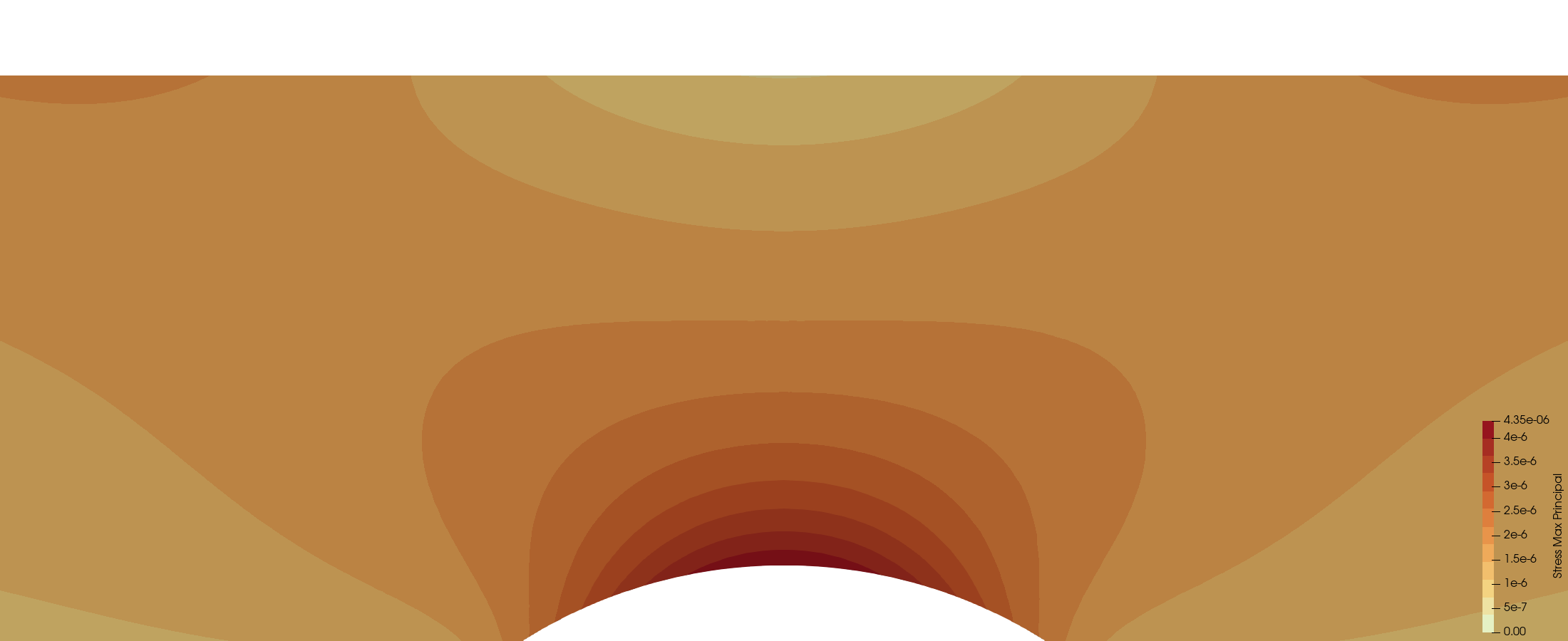
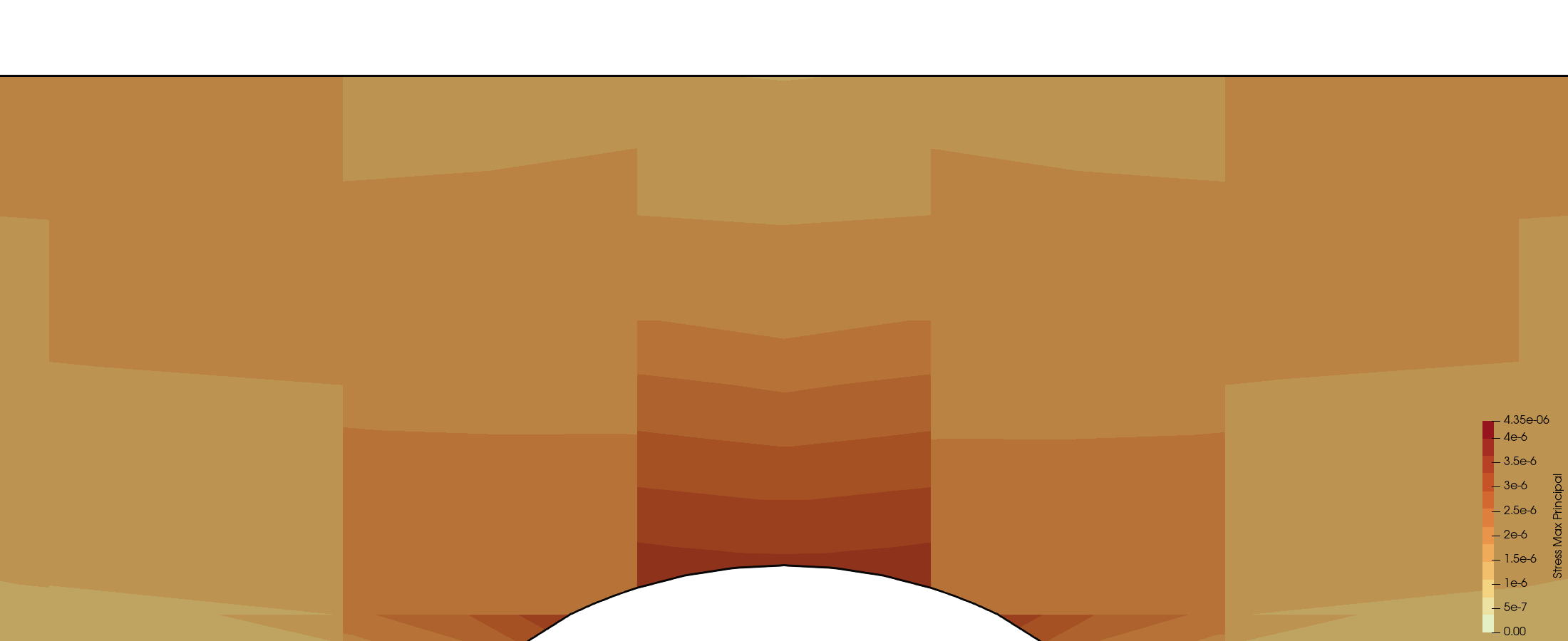
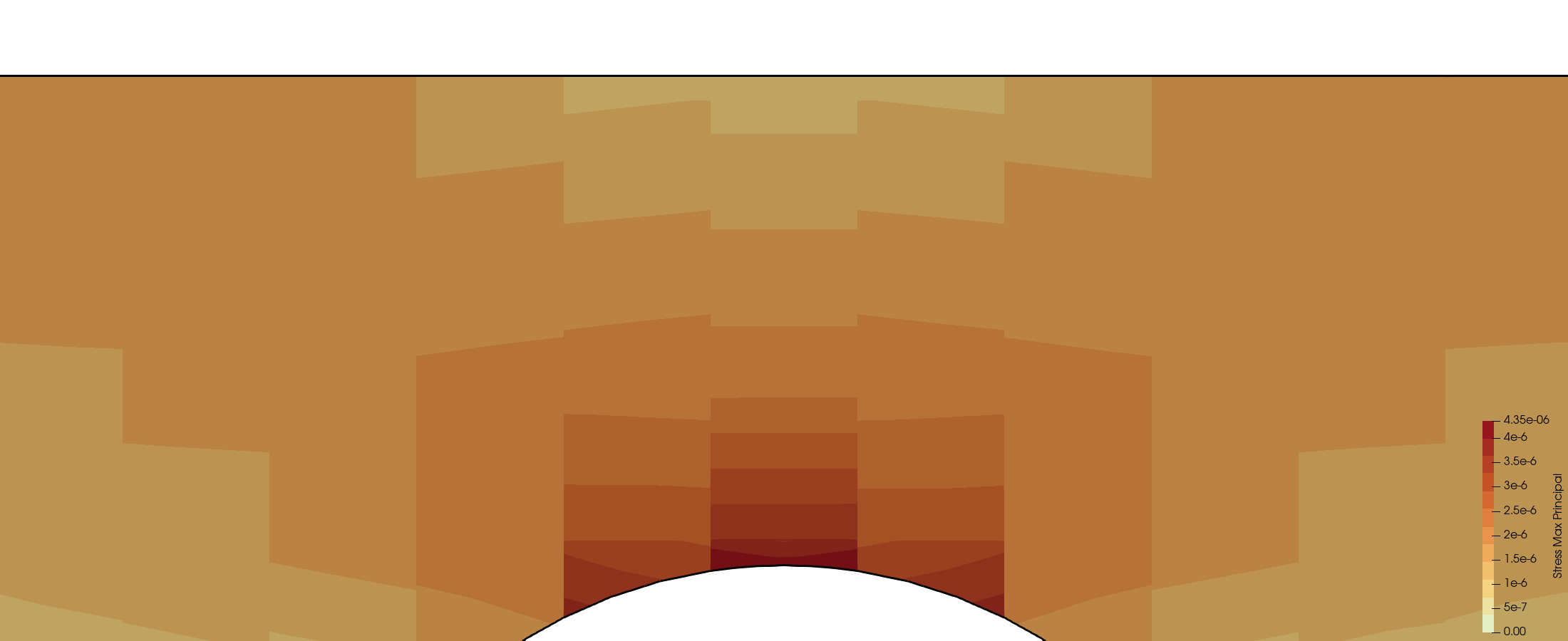
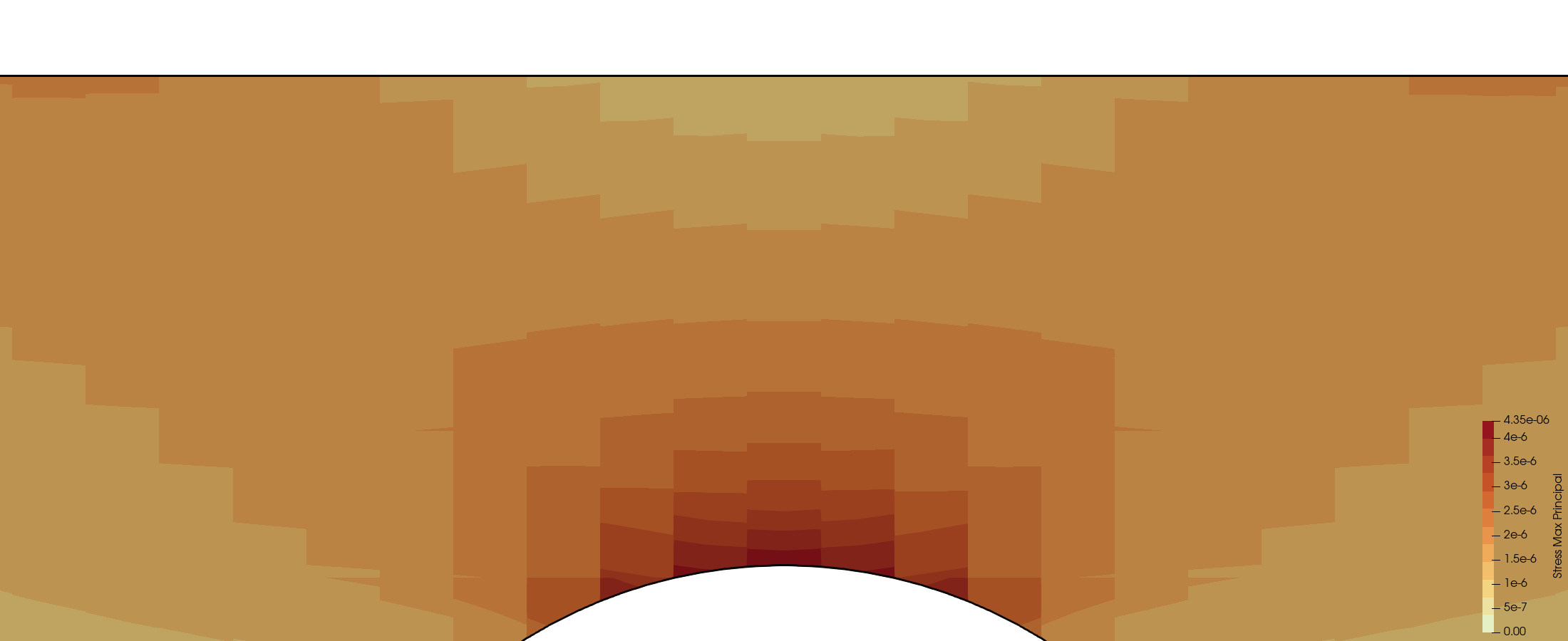
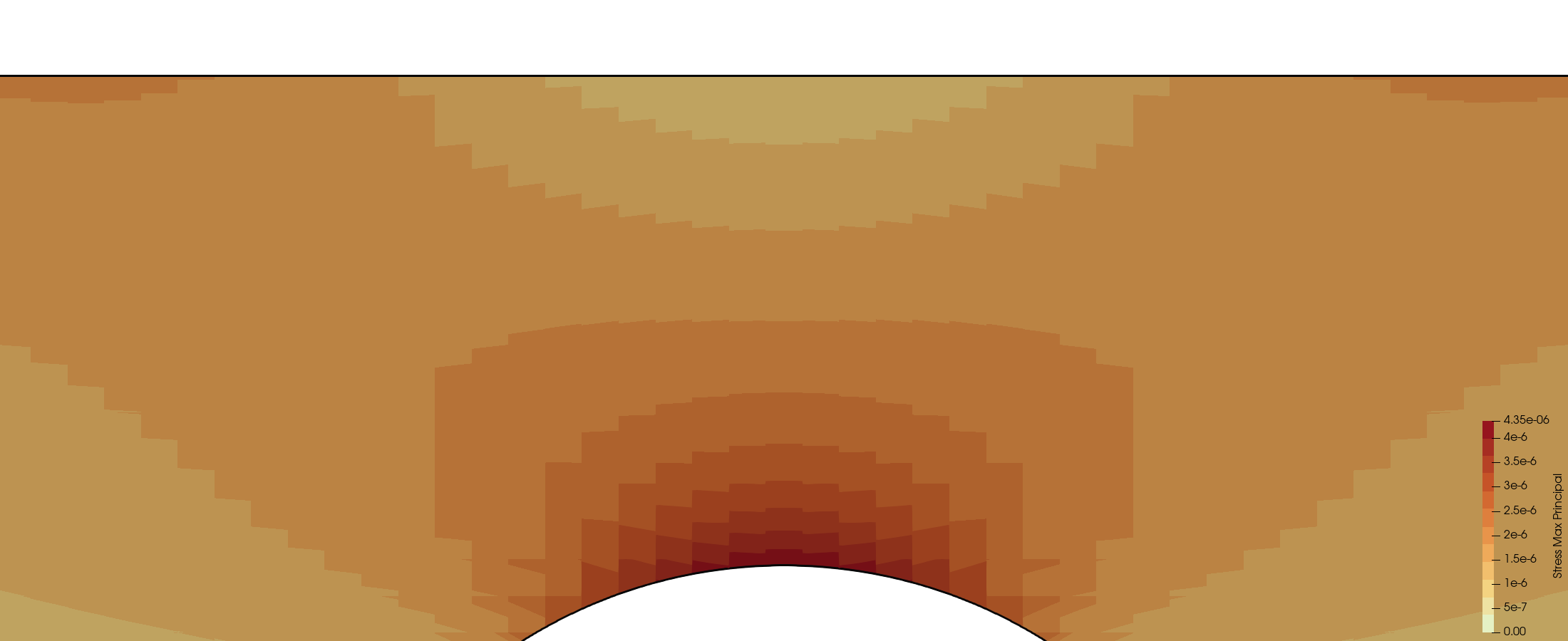
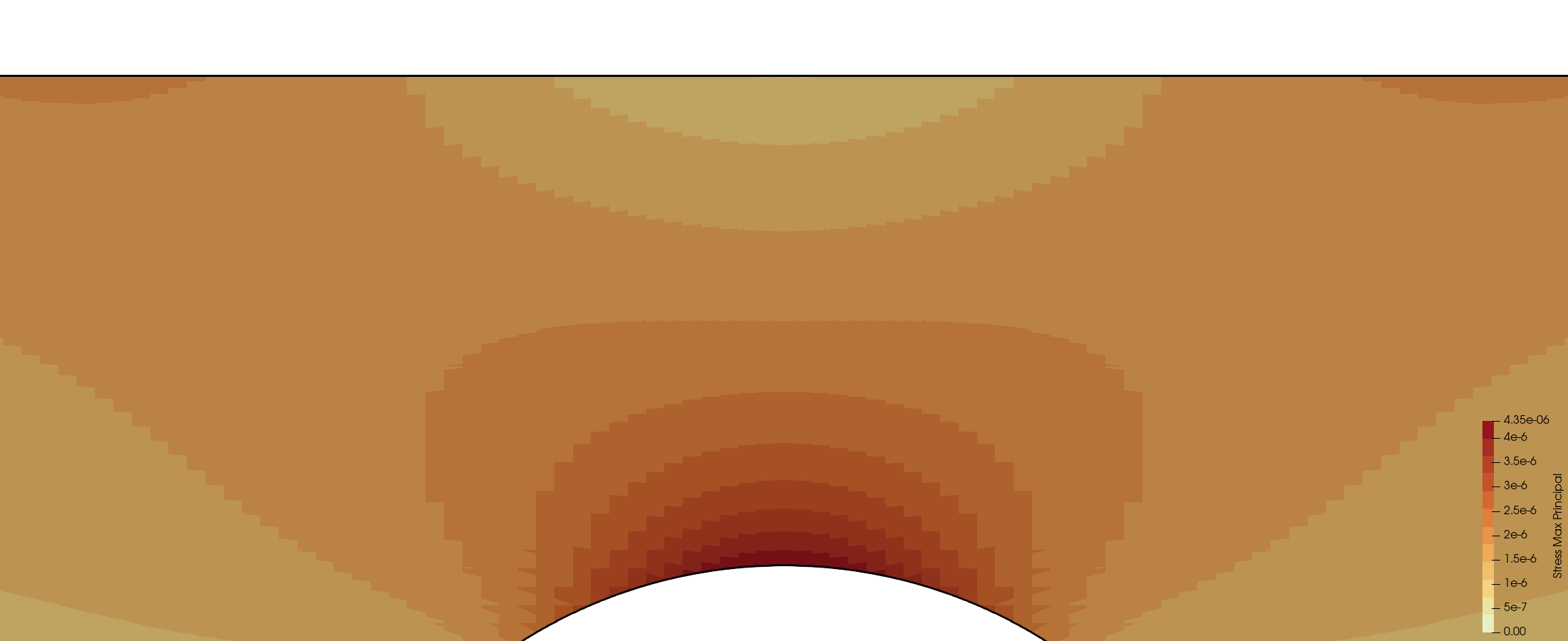
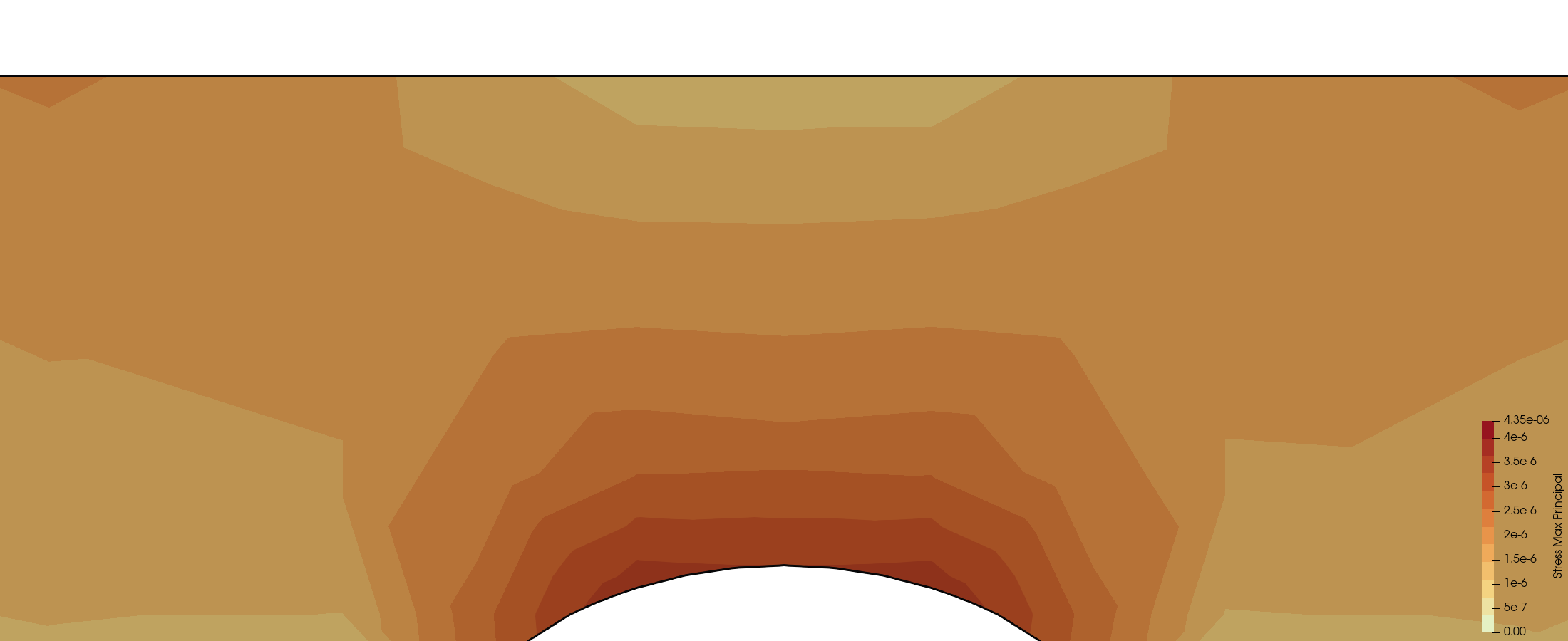
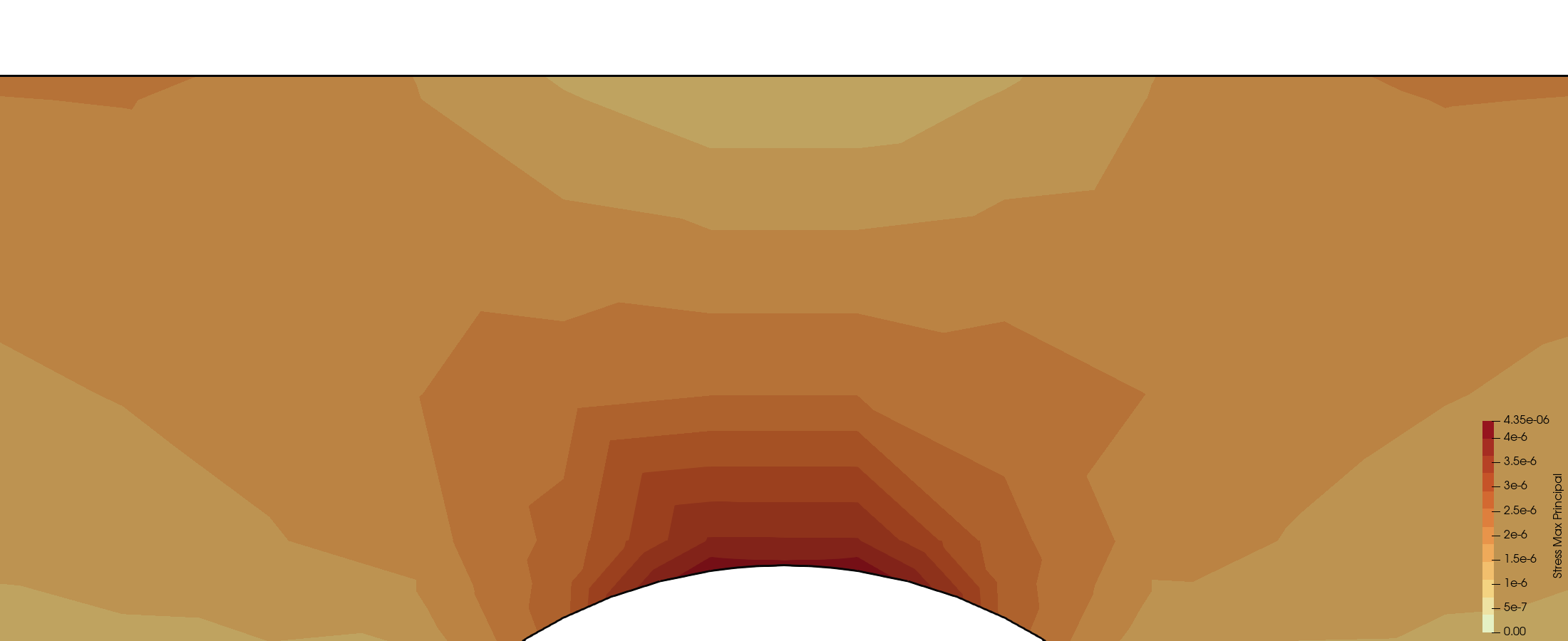
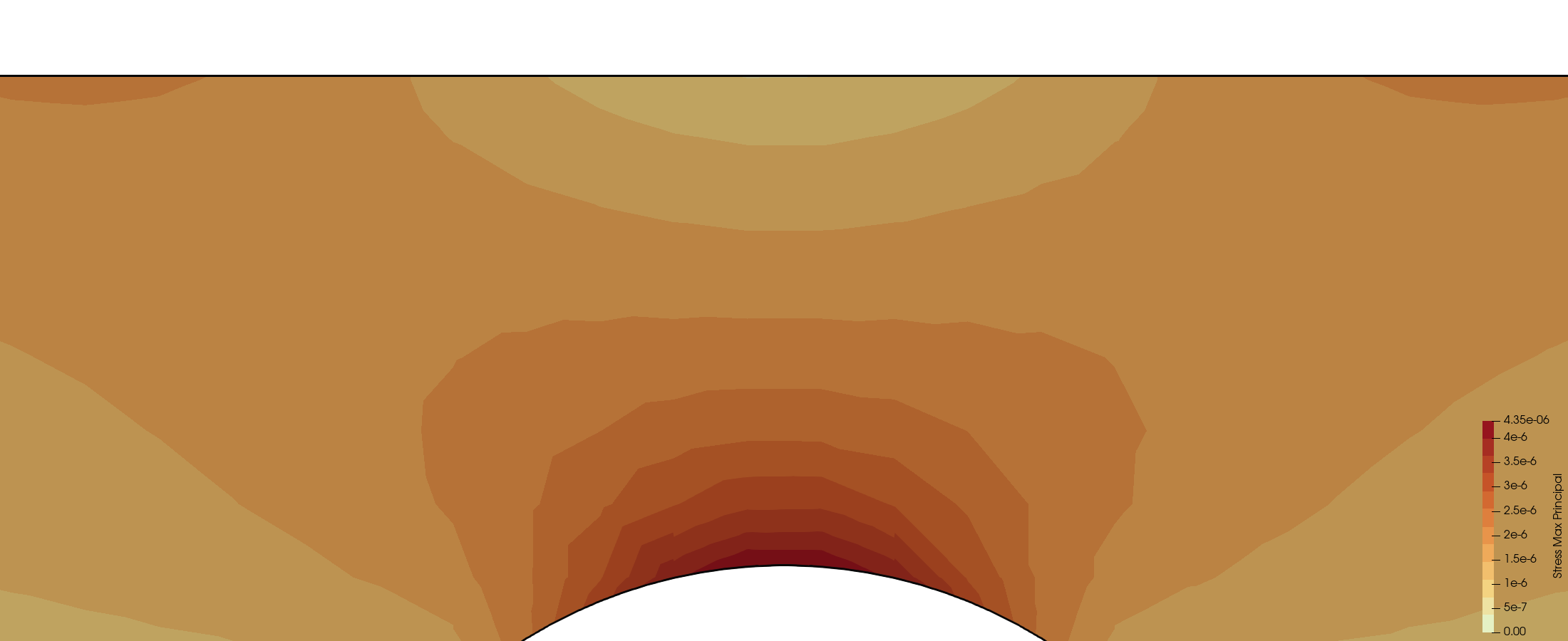
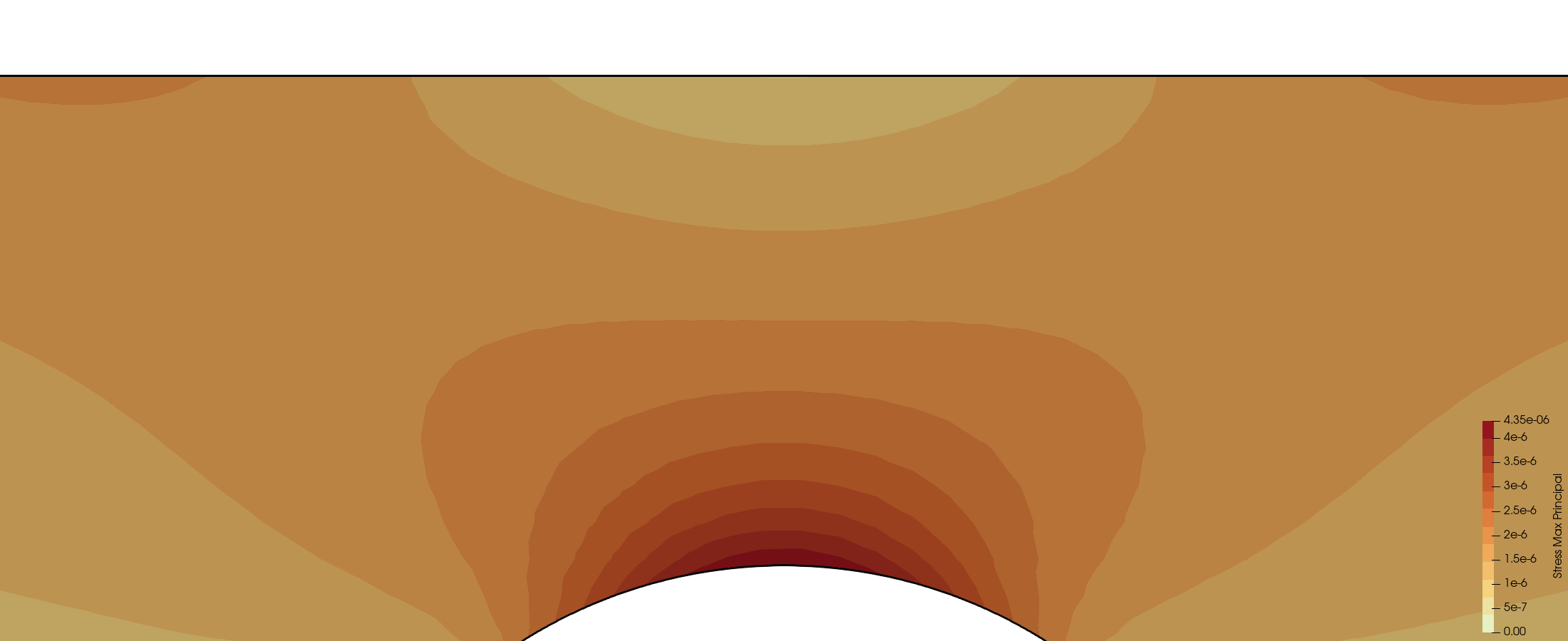
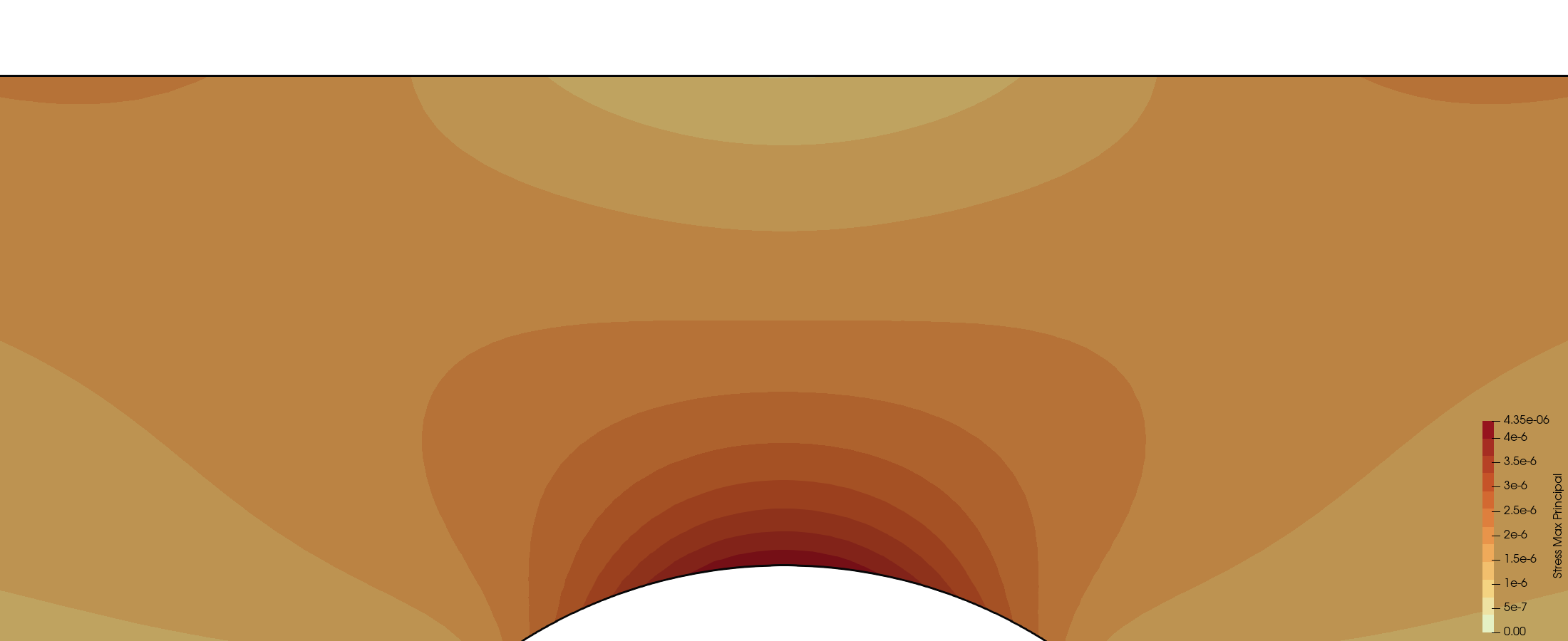
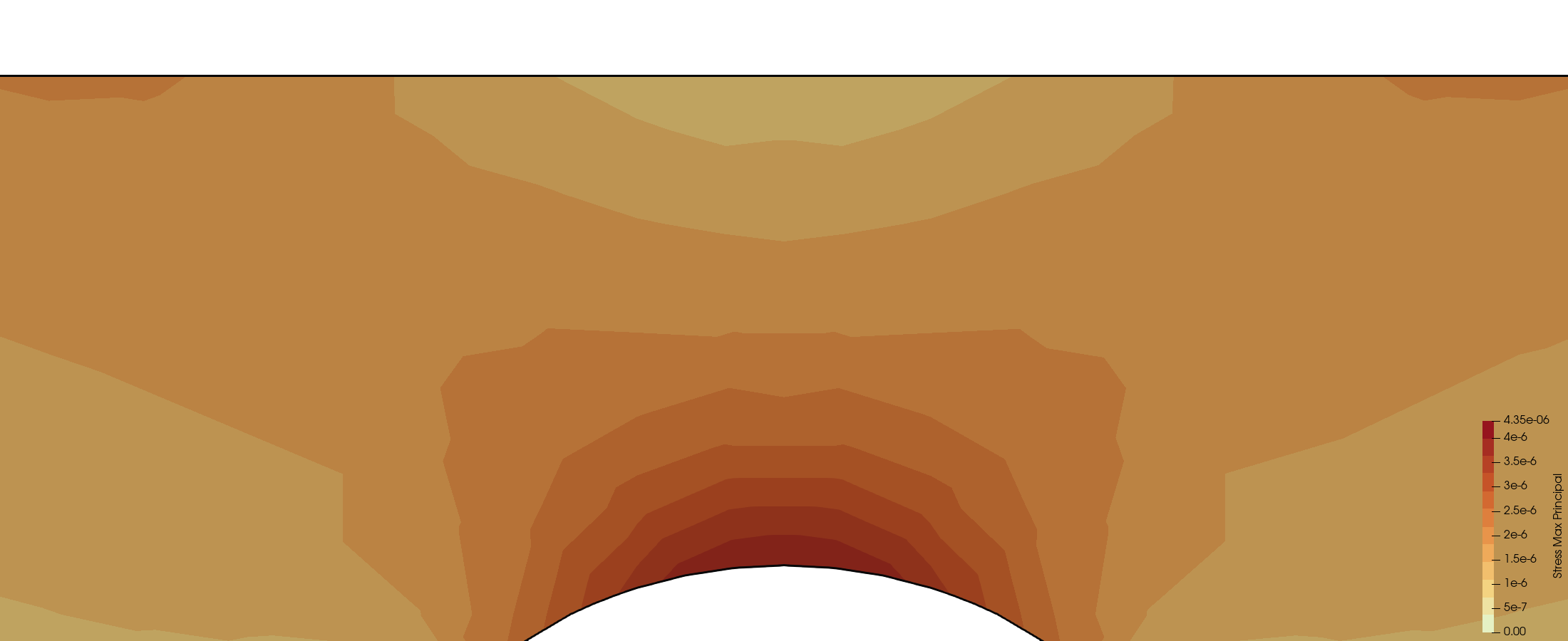
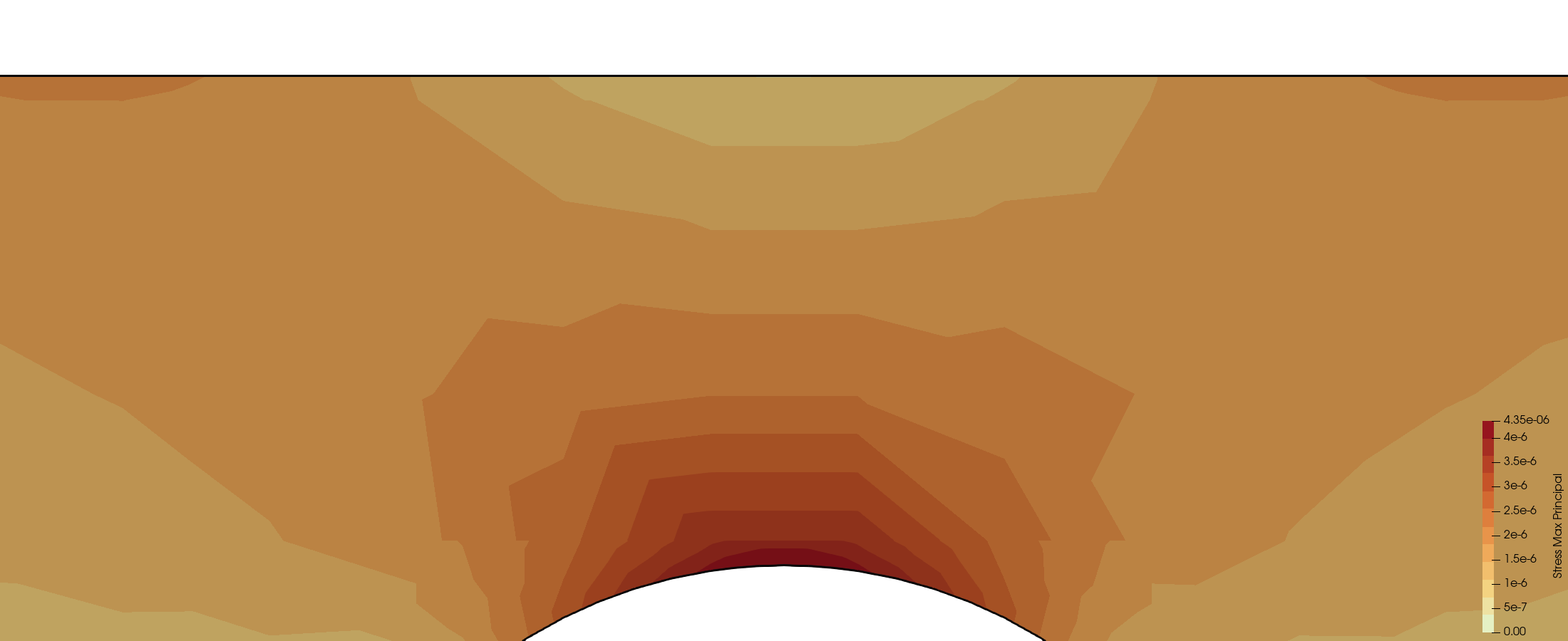
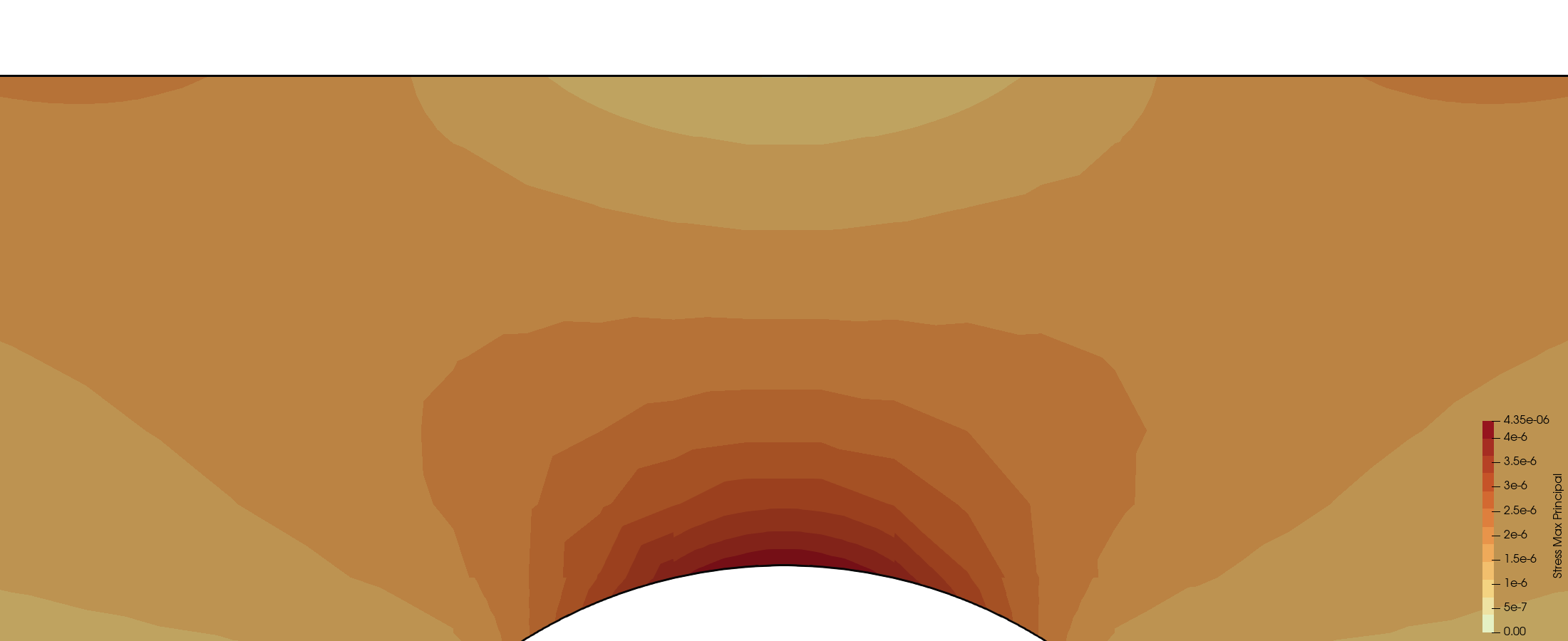
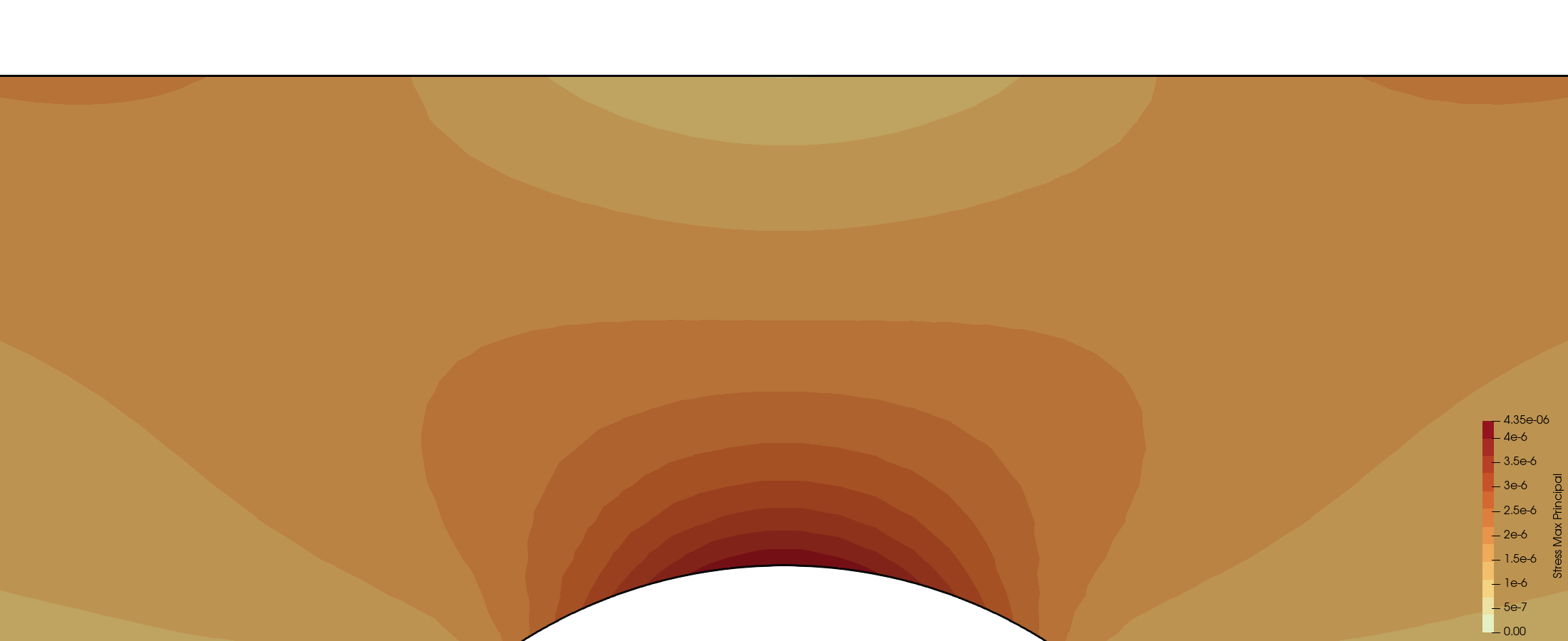
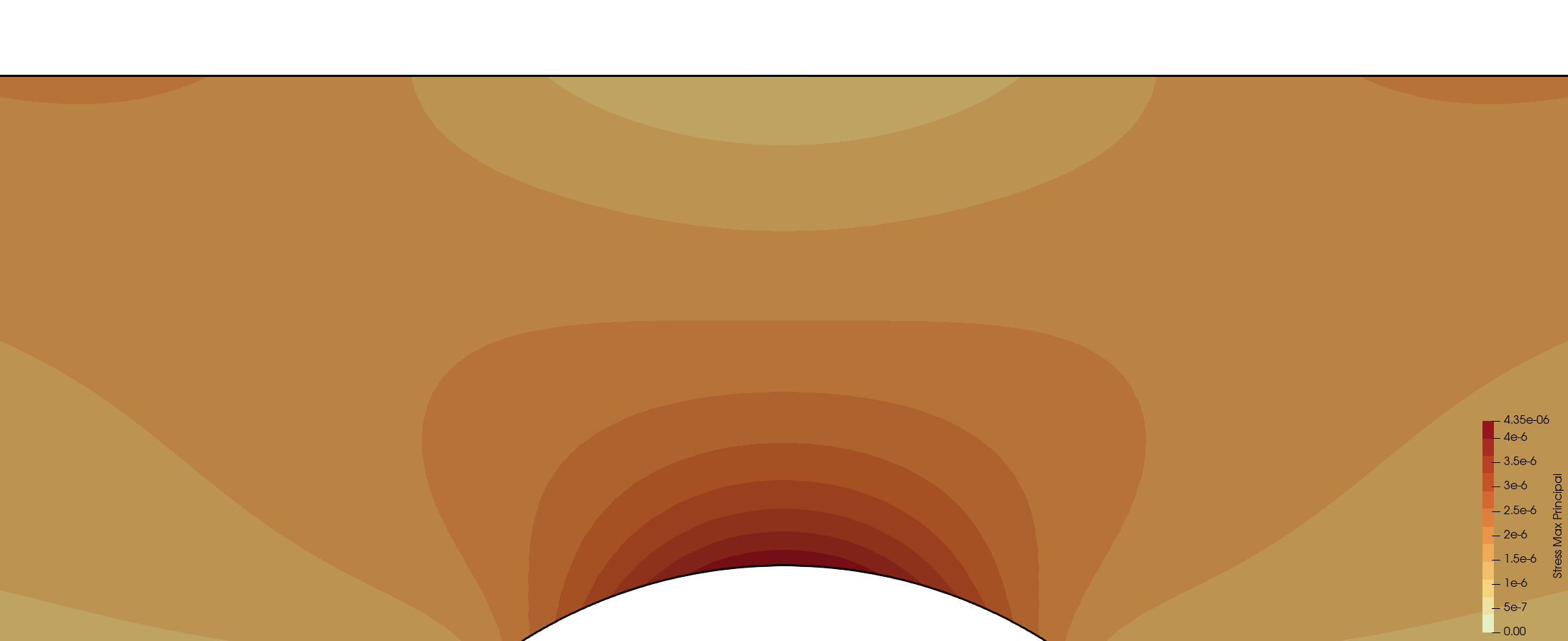
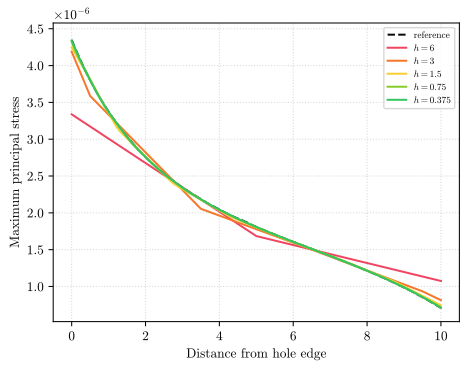
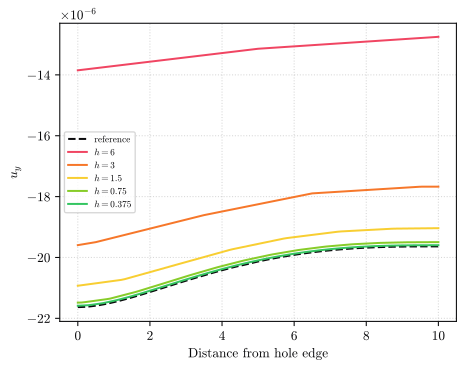
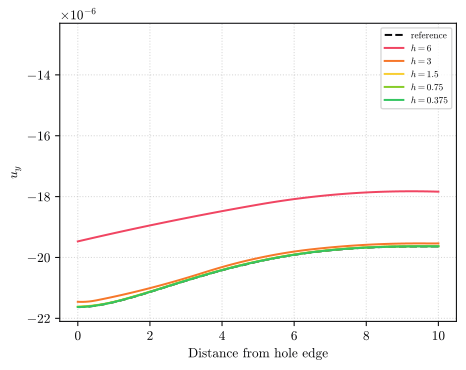
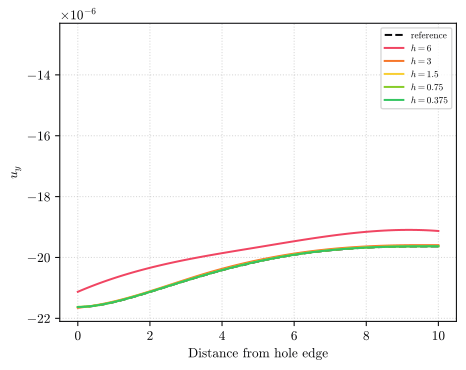
Figure 4 shows the transverse max-principal-stress profile along the line probe: the reference Abaqus solve against the coarse→fine IGA sweep, per degree. The IGA curves settle onto a consistent profile as \(h\) decreases.
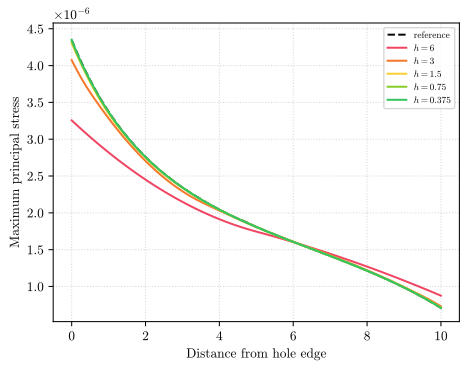
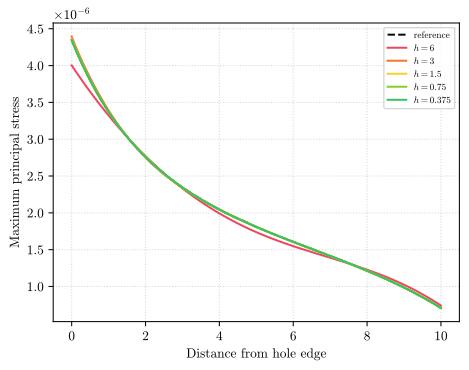
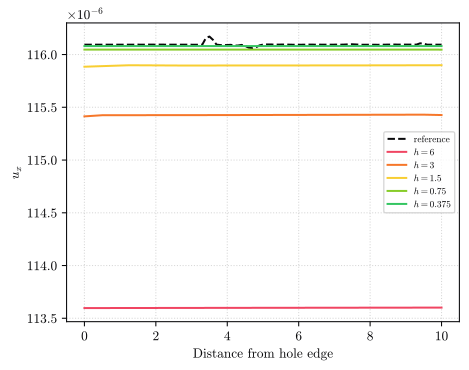
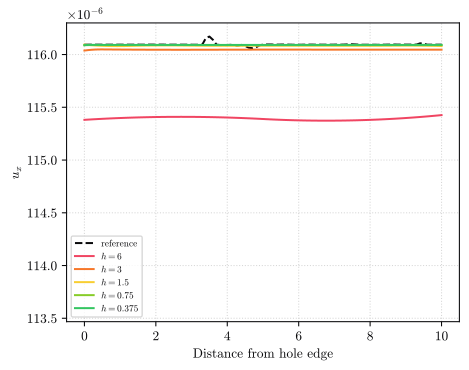
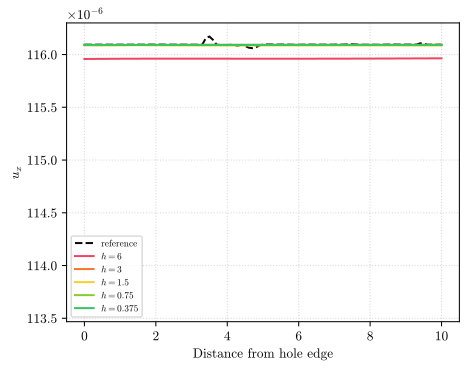
The transverse displacement components show the same \(h\)-refinement behavior — Figure 5 for \(u_x\) and Figure 6 for \(u_y\).
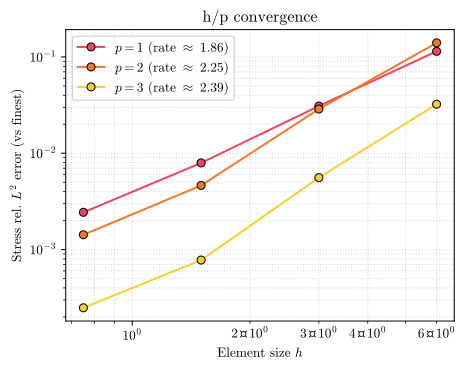
Because the reference solve is itself an approximation — the IGA discretization may converge to a slightly different (and possibly more accurate) solution — we assess convergence against the finest IGA solution (self-convergence) rather than the reference. Figure 7 shows the transverse-stress \(L^2\) error toward that finest solution, with fitted rates of 1.86 (\(p=1\)), 2.25 (\(p=2\)), and 2.39 (\(p=3\)).
Performance is reported separately for the two stages of an immersed IGA analysis: trimming (building the trimmed U-spline basis on the immersing grid) and the Abaqus solve.
For each case the immersing background grid, the active Bezier elements kept in the analysis basis, and the cells actually cut by the part boundary are read from the trim database; the counts are nested subsets (background \(\supseteq\) active \(\supseteq\) trimmed), so they decrease left to right.
| \(h\) | Total | Active | Trimmed | CPUs | Wall-time [s] |
|---|---|---|---|---|---|
| \(6\) | \(2{,}145\) | \(240\) | \(96\) | \(1\) | \(7.2\) |
| \(3\) | \(6{,}745\) | \(984\) | \(199\) | \(2\) | \(13.2\) |
| \(1.5\) | \(21{,}545\) | \(3{,}532\) | \(402\) | \(4\) | \(24.9\) |
| \(0.75\) | \(79{,}945\) | \(14{,}180\) | \(794\) | \(8\) | \(54.3\) |
| \(0.375\) | \(299{,}145\) | \(55{,}108\) | \(1{,}563\) | \(16\) | \(161.2\) |
| \(h\) | Total | Active | Trimmed | CPUs | Wall-time [s] |
|---|---|---|---|---|---|
| \(6\) | \(2{,}145\) | \(240\) | \(96\) | \(1\) | \(7.1\) |
| \(3\) | \(6{,}745\) | \(984\) | \(199\) | \(2\) | \(13.6\) |
| \(1.5\) | \(21{,}545\) | \(3{,}532\) | \(402\) | \(4\) | \(25.3\) |
| \(0.75\) | \(79{,}945\) | \(14{,}180\) | \(794\) | \(8\) | \(53.4\) |
| \(0.375\) | \(299{,}145\) | \(55{,}108\) | \(1{,}563\) | \(16\) | \(142.5\) |
| \(h\) | Total | Active | Trimmed | CPUs | Wall-time [s] |
|---|---|---|---|---|---|
| \(6\) | \(2{,}145\) | \(240\) | \(96\) | \(1\) | \(8.1\) |
| \(3\) | \(6{,}745\) | \(984\) | \(199\) | \(2\) | \(15.5\) |
| \(1.5\) | \(21{,}545\) | \(3{,}532\) | \(402\) | \(4\) | \(28.7\) |
| \(0.75\) | \(79{,}945\) | \(14{,}180\) | \(794\) | \(8\) | \(60.7\) |
| \(0.375\) | \(299{,}145\) | \(55{,}108\) | \(1{,}563\) | \(16\) | \(153.5\) |
Problem size and solve-stage timing of the Abaqus job: the wall time is the Abaqus/Standard (solve) stage only — the pre and cleanup stages are excluded.
| \(h\) | Elements | Nodes | DOFs | Threads | Wall-time [s] |
|---|---|---|---|---|---|
| \(6\) | \(458\) | \(770\) | \(2{,}310\) | \(1\) | \(1\) |
| \(3\) | \(1{,}354\) | \(2{,}466\) | \(7{,}398\) | \(2\) | \(1\) |
| \(1.5\) | \(4{,}326\) | \(8{,}106\) | \(24{,}318\) | \(4\) | \(1\) |
| \(0.75\) | \(15{,}772\) | \(30{,}413\) | \(91{,}239\) | \(8\) | \(4\) |
| \(0.375\) | \(58{,}126\) | \(114{,}226\) | \(342{,}678\) | \(16\) | \(11\) |
| \(h\) | Elements | Nodes | DOFs | Threads | Wall-time [s] |
|---|---|---|---|---|---|
| \(6\) | \(458\) | \(1{,}202\) | \(3{,}606\) | \(1\) | \(2\) |
| \(3\) | \(1{,}354\) | \(3{,}814\) | \(11{,}442\) | \(2\) | \(2\) |
| \(1.5\) | \(4{,}326\) | \(12{,}382\) | \(37{,}146\) | \(4\) | \(4\) |
| \(0.75\) | \(15{,}772\) | \(46{,}069\) | \(138{,}207\) | \(8\) | \(10\) |
| \(0.375\) | \(58{,}126\) | \(172{,}286\) | \(516{,}858\) | \(16\) | \(29\) |
| \(h\) | Elements | Nodes | DOFs | Threads | Wall-time [s] |
|---|---|---|---|---|---|
| \(6\) | \(560\) | \(1{,}804\) | \(5{,}412\) | \(1\) | \(3\) |
| \(3\) | \(1{,}536\) | \(5{,}476\) | \(16{,}428\) | \(2\) | \(9\) |
| \(1.5\) | \(4{,}994\) | \(17{,}443\) | \(52{,}329\) | \(4\) | \(19\) |
| \(0.75\) | \(17{,}454\) | \(63{,}469\) | \(190{,}407\) | \(8\) | \(49\) |
| \(0.375\) | \(59{,}676\) | \(232{,}932\) | \(698{,}796\) | \(16\) | \(150\) |
The body-fitted reference solve, for scale alongside the immersed cases.
| \(h\) | Elements (C3D20) | Nodes | DOFs | Threads | Wall-time [s] |
|---|---|---|---|---|---|
| \(0.375\) | \(202{,}521\) | \(1{,}020{,}569\) | \(3{,}061{,}707\) | \(16\) | \(131\) |
At the finest mesh Coreform IGA recovers the accepted peak stress to 0.64% of Roark’s \(K_t\) and the reference peak to 0.07%, while the transverse stress and displacement profiles match the reference to better than \(10^{-3}\) in relative \(L^2\). Under uniform refinement the stress profile self-converges at rates of 1.86 (\(p=1\)), 2.25 (\(p=2\)), and 2.39 (\(p=3\)); the coarsest immersed meshes are pre-asymptotic, where raising the polynomial degree does not improve accuracy until the background mesh resolves the stress concentration.
Because the reference is itself an approximate FEM solution, convergence is assessed against the finest IGA solution rather than the reference. Agreement between Coreform IGA and the independent body-fitted reference to within a fraction of a percent — with both agreeing with Roark’s analytic \(K_t\) — verifies the Coreform IGA immersed U-spline discretization for this stress-concentration problem.
The table is generated from current passing simulation artifacts. Each row must satisfy the linked capability card’s evidence contract; declaring a capability in a test does not, by itself, create evidence.
Download all verification artifacts (ZIP)
No separate CAD file is required for this problem; the geometry is fully defined in the Abaqus/CAE journal files.
16 generated Abaqus/CAE journals are available.
The deck below is reproduced from the verification tests’ Abaqus input files with comments stripped and instance-specific names (sets, materials, files) redacted to <placeholders>.
*Heading
*Preprint, echo=NO, model=NO, history=NO, contact=NO
*Include, input=<iga-mesh-inp>
*System
*Material, name=<material>
*Elastic
1.,0.
*User Output Variables
1,
*Boundary
<node-set>, PINNED
*Step, name=<step>, nlgeom=NO
*Static
1., 1., 1e-05, 1.
*Restart, write, frequency=0
*Output, field
*Node Output
U,
*Element Output, position=AVERAGED AT NODES, directions=YES
S,
*Node Output
U
*Output, history, variable=PRESELECT
*End StepThe records below identify the execution environment and verification basis for every CTest artifact reported on this page.
| Parameter | Value |
|---|---|
| Evidence type | Record-only diagnostic |
| CTest result | Passed (Release) |
| Verification result | Not asserted — 4 record-only checks (0 positive) |
| Test date | 10-Sep-2026 16:03:28 |
| Operating system | Ubuntu 22.04.4 LTS |
| Coreform IGA version | 2026.9+69838 |
| Source revision | d88163e59ac0 |
| Abaqus version | Abaqus 6.26-4 |
| Parameter | Value |
|---|---|
| Evidence type | Record-only diagnostic |
| CTest result | Passed (Release) |
| Verification result | Not asserted — 4 record-only checks (1 positive) |
| Test date | 10-Sep-2026 16:03:27 |
| Operating system | Ubuntu 22.04.4 LTS |
| Coreform IGA version | 2026.9+69838 |
| Source revision | d88163e59ac0 |
| Abaqus version | Abaqus 6.26-4 |
| Parameter | Value |
|---|---|
| Evidence type | Record-only diagnostic |
| CTest result | Passed (Release) |
| Verification result | Not asserted — 4 record-only checks (1 positive) |
| Test date | 10-Sep-2026 16:02:28 |
| Operating system | Ubuntu 22.04.4 LTS |
| Coreform IGA version | 2026.9+69838 |
| Source revision | d88163e59ac0 |
| Abaqus version | Abaqus 6.26-4 |
| Parameter | Value |
|---|---|
| Evidence type | Record-only diagnostic |
| CTest result | Passed (Release) |
| Verification result | Not asserted — 4 record-only checks (2 positive) |
| Test date | 10-Sep-2026 16:21:20 |
| Operating system | Ubuntu 22.04.4 LTS |
| Coreform IGA version | 2026.9+69838 |
| Source revision | d88163e59ac0 |
| Abaqus version | Abaqus 6.26-4 |
| Parameter | Value |
|---|---|
| Evidence type | Record-only diagnostic |
| CTest result | Passed (Release) |
| Verification result | Not asserted — 4 record-only checks (2 positive) |
| Test date | 10-Sep-2026 16:21:14 |
| Operating system | Ubuntu 22.04.4 LTS |
| Coreform IGA version | 2026.9+69838 |
| Source revision | d88163e59ac0 |
| Abaqus version | Abaqus 6.26-4 |
| Parameter | Value |
|---|---|
| Evidence type | Numerical verification |
| CTest result | Passed (Release) |
| Verification result | Passed — 4/4 enforced criteria passed |
| Test date | 10-Sep-2026 16:19:02 |
| Operating system | Ubuntu 22.04.4 LTS |
| Coreform IGA version | 2026.9+69838 |
| Source revision | d88163e59ac0 |
| Abaqus version | Abaqus 6.26-4 |
| Parameter | Value |
|---|---|
| Evidence type | Record-only diagnostic |
| CTest result | Passed (Release) |
| Verification result | Not asserted — 4 record-only checks (3 positive) |
| Test date | 10-Sep-2026 16:48:57 |
| Operating system | Ubuntu 22.04.4 LTS |
| Coreform IGA version | 2026.9+69838 |
| Source revision | d88163e59ac0 |
| Abaqus version | Abaqus 6.26-4 |
| Parameter | Value |
|---|---|
| Evidence type | Numerical verification |
| CTest result | Passed (Release) |
| Verification result | Passed — 4/4 enforced criteria passed |
| Test date | 10-Sep-2026 16:47:31 |
| Operating system | Ubuntu 22.04.4 LTS |
| Coreform IGA version | 2026.9+69838 |
| Source revision | d88163e59ac0 |
| Abaqus version | Abaqus 6.26-4 |
| Parameter | Value |
|---|---|
| Evidence type | Numerical verification |
| CTest result | Passed (Release) |
| Verification result | Passed — 4/4 enforced criteria passed |
| Test date | 10-Sep-2026 16:45:54 |
| Operating system | Ubuntu 22.04.4 LTS |
| Coreform IGA version | 2026.9+69838 |
| Source revision | d88163e59ac0 |
| Abaqus version | Abaqus 6.26-4 |
| Parameter | Value |
|---|---|
| Evidence type | Numerical verification |
| CTest result | Passed (Release) |
| Verification result | Passed — 4/4 enforced criteria passed |
| Test date | 10-Sep-2026 16:53:42 |
| Operating system | Ubuntu 22.04.4 LTS |
| Coreform IGA version | 2026.9+69838 |
| Source revision | d88163e59ac0 |
| Abaqus version | Abaqus 6.26-4 |
| Parameter | Value |
|---|---|
| Evidence type | Numerical verification |
| CTest result | Passed (Release) |
| Verification result | Passed — 4/4 enforced criteria passed |
| Test date | 10-Sep-2026 16:52:47 |
| Operating system | Ubuntu 22.04.4 LTS |
| Coreform IGA version | 2026.9+69838 |
| Source revision | d88163e59ac0 |
| Abaqus version | Abaqus 6.26-4 |
| Parameter | Value |
|---|---|
| Evidence type | Numerical verification |
| CTest result | Passed (Release) |
| Verification result | Passed — 4/4 enforced criteria passed |
| Test date | 10-Sep-2026 16:52:14 |
| Operating system | Ubuntu 22.04.4 LTS |
| Coreform IGA version | 2026.9+69838 |
| Source revision | d88163e59ac0 |
| Abaqus version | Abaqus 6.26-4 |
| Parameter | Value |
|---|---|
| Evidence type | Numerical verification |
| CTest result | Passed (Release) |
| Verification result | Passed — 4/4 enforced criteria passed |
| Test date | 10-Sep-2026 17:08:41 |
| Operating system | Ubuntu 22.04.4 LTS |
| Coreform IGA version | 2026.9+69838 |
| Source revision | d88163e59ac0 |
| Abaqus version | Abaqus 6.26-4 |
| Parameter | Value |
|---|---|
| Evidence type | Numerical verification |
| CTest result | Passed (Release) |
| Verification result | Passed — 4/4 enforced criteria passed |
| Test date | 10-Sep-2026 17:01:24 |
| Operating system | Ubuntu 22.04.4 LTS |
| Coreform IGA version | 2026.9+69838 |
| Source revision | d88163e59ac0 |
| Abaqus version | Abaqus 6.26-4 |
| Parameter | Value |
|---|---|
| Evidence type | Numerical verification |
| CTest result | Passed (Release) |
| Verification result | Passed — 4/4 enforced criteria passed |
| Test date | 10-Sep-2026 16:44:14 |
| Operating system | Ubuntu 22.04.4 LTS |
| Coreform IGA version | 2026.9+69838 |
| Source revision | d88163e59ac0 |
| Abaqus version | Abaqus 6.26-4 |
| Parameter | Value |
|---|---|
| Evidence type | Numerical verification |
| CTest result | Passed (Release) |
| Verification result | Passed — 4/4 enforced criteria passed |
| Test date | 10-Sep-2026 16:20:11 |
| Operating system | Ubuntu 22.04.4 LTS |
| Coreform IGA version | 2026.9+69838 |
| Source revision | d88163e59ac0 |
| Abaqus version | Abaqus 6.26-4 |